The proof3 Assessment · Scottsdale, AZ
One read of what it’s made of, how it moves, and what it can produce — and what to do next.
Sixty minutes. No fitness required. The results are yours either way.
What we measure
Body
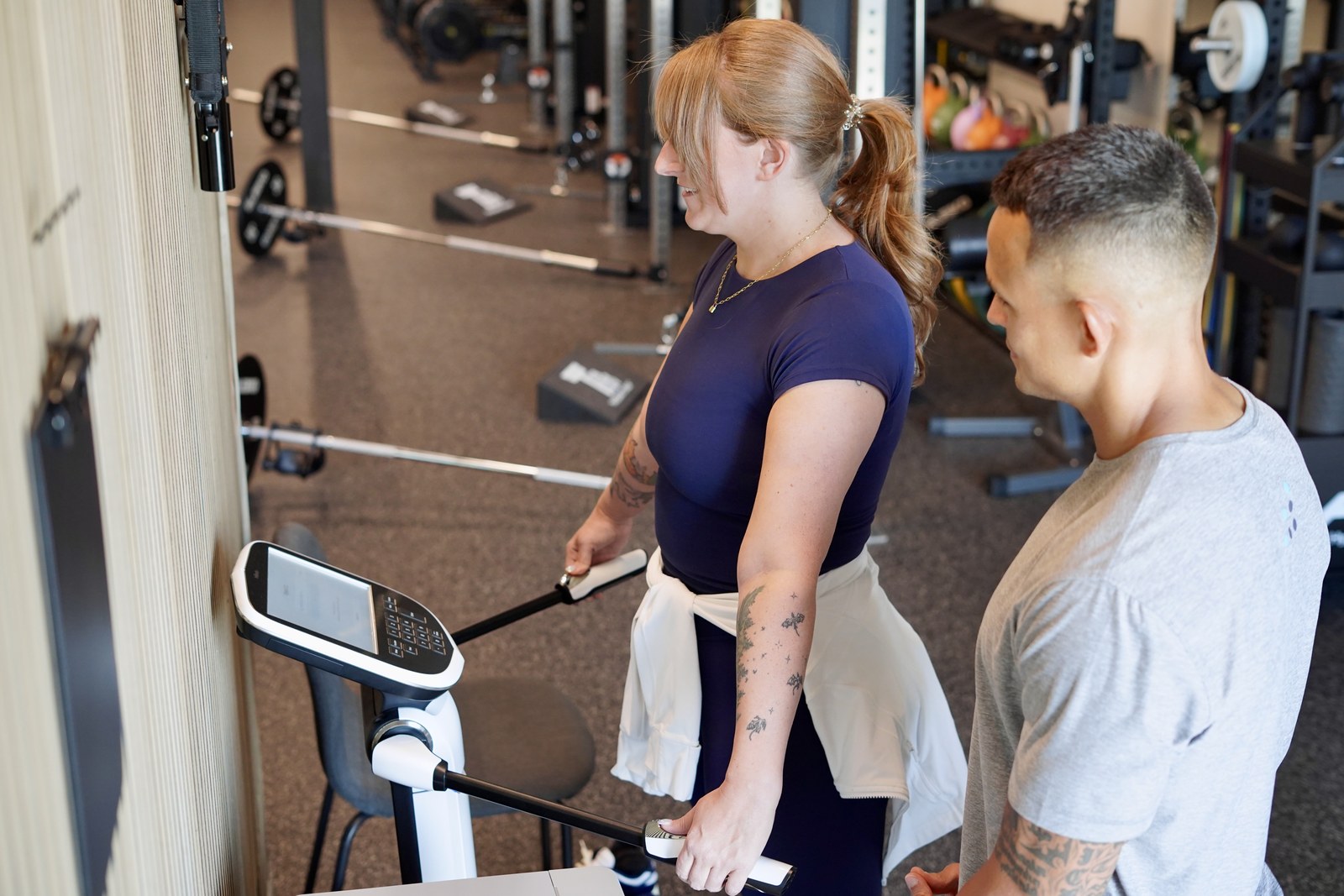
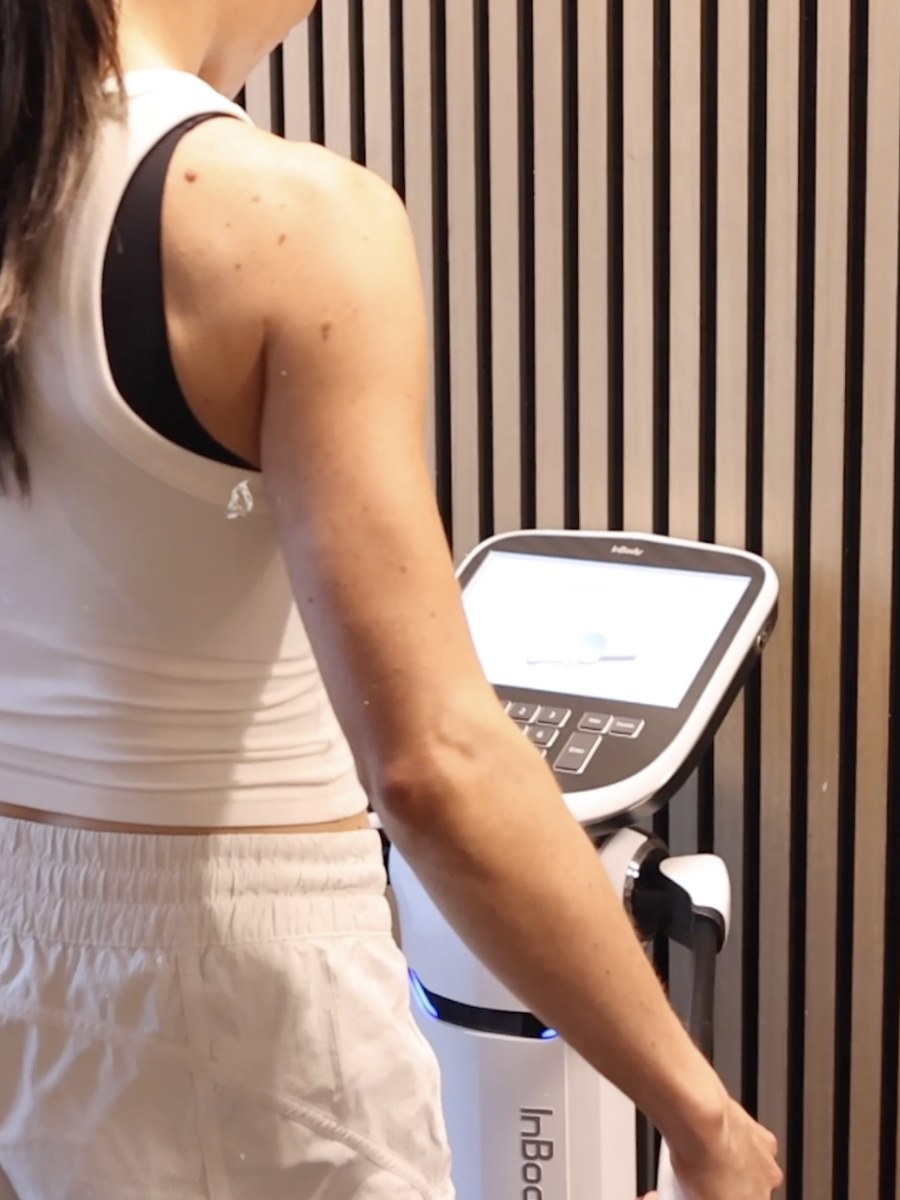
Body composition & grip strength
Move
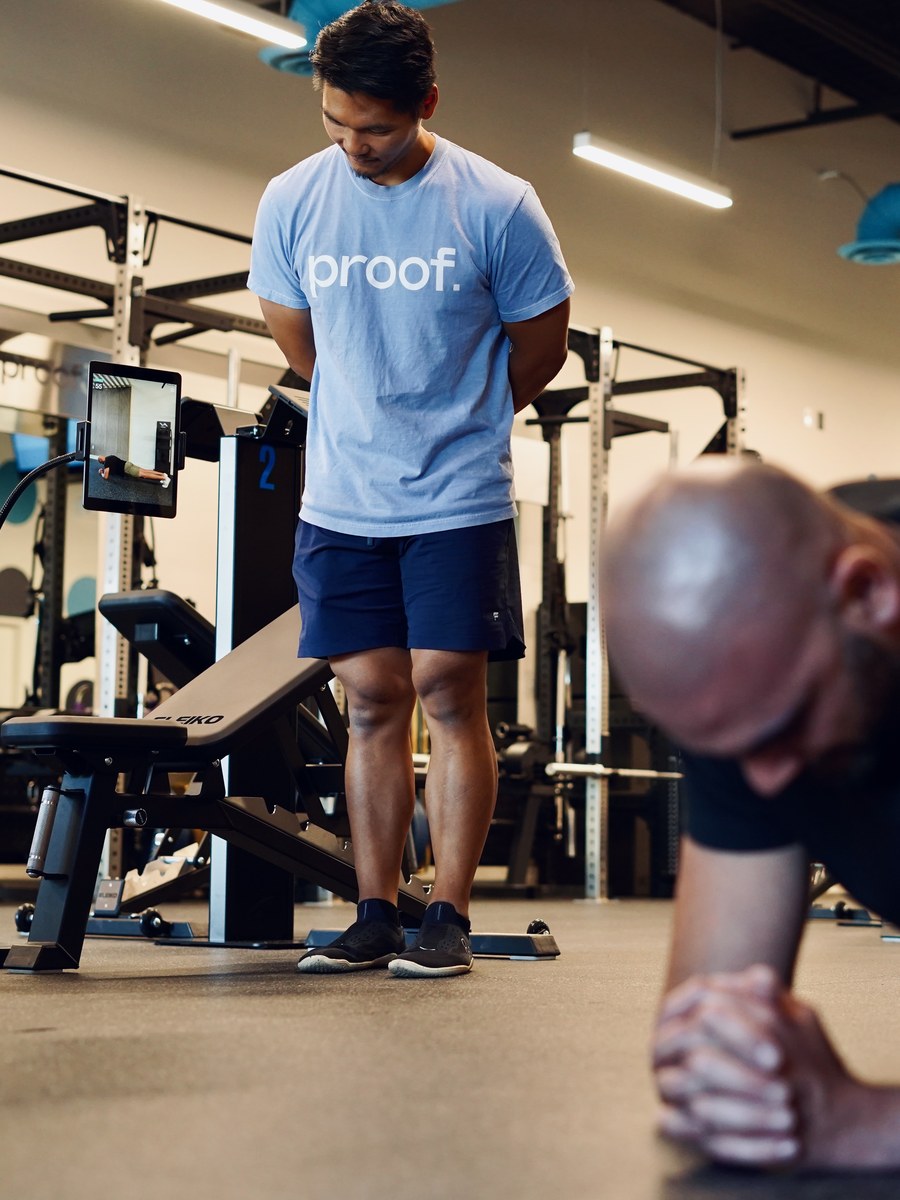
Movement quality
Power
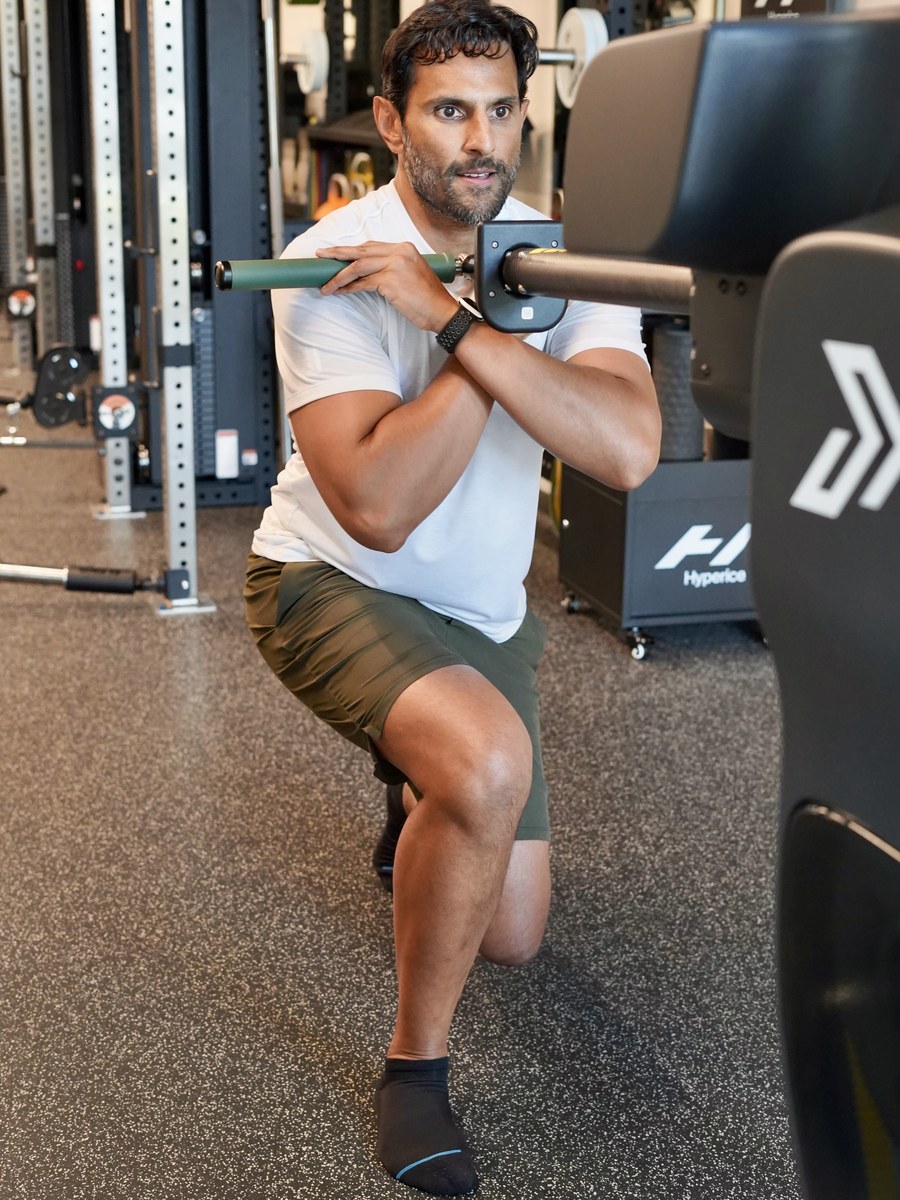
Force and speed, side by side
Power is not strength. Strength is how much you can move. Power is how fast you can move it. Strength shows up in your training numbers. Power gets measured here, because it is the one the research ties most closely to staying capable.
One number
Your three test results combine into a single score. It is not a grade and there is no passing mark. It is a starting line — the thing your next assessment gets measured against.
Reassessed every three to six months. Same tests, same conditions.
36 seconds · what the number means
Why these three
How much force you can produce, and how fast, turns out to track something bigger than training. In large studies it tracks how long people stay independent.
The PURE study followed 139,691 adults across 17 countries. Every 5 kg drop in grip strength came with a 16% higher risk of death from any cause. Grip predicted mortality more strongly than blood pressure did.
Leong et al., The Lancet, 2015In 2025, researchers followed 3,889 adults aged 46 to 75 for about eleven years. Those with the least muscle power were six to seven times more likely to die during the study than those with the most. Maximum strength was the weaker signal. Power was the stronger one.
Araújo et al., Mayo Clinic Proceedings, 2025Moving well is what lets you train hard without getting hurt, and training you can repeat is the only thing that changes a body over years. Better range, control and posture mean more of the work you do actually lands, and fewer of the setbacks that send people back to zero. That is what keeps a life full — carrying your own bags, getting off the floor, saying yes to the hike.
Two papers don’t settle a question, and we don’t treat them as though they do. The research on strength, power and healthspan is still moving, and we keep reading it — as the evidence gets better, our assessment changes with it. What we can do today is measure what the evidence currently points to, show you exactly where you stand, and build your training around it. We can’t promise you more years. Nobody honestly can. The proof3 Assessment is a fitness assessment. It is not a medical test and it is not a diagnosis.
And yes — how you look
Toned isn’t a type of muscle. It’s having enough of it, under less fat. Those are two separate things that move in different directions, and a bathroom scale can’t tell you which one just changed. The InBody can, limb by limb.
Moving well is what lets you train hard without breaking down, and training you can repeat is the only thing that changes a body. Power tells us how hard we can push you. Movement tells us where that’s safe.
What actually happens
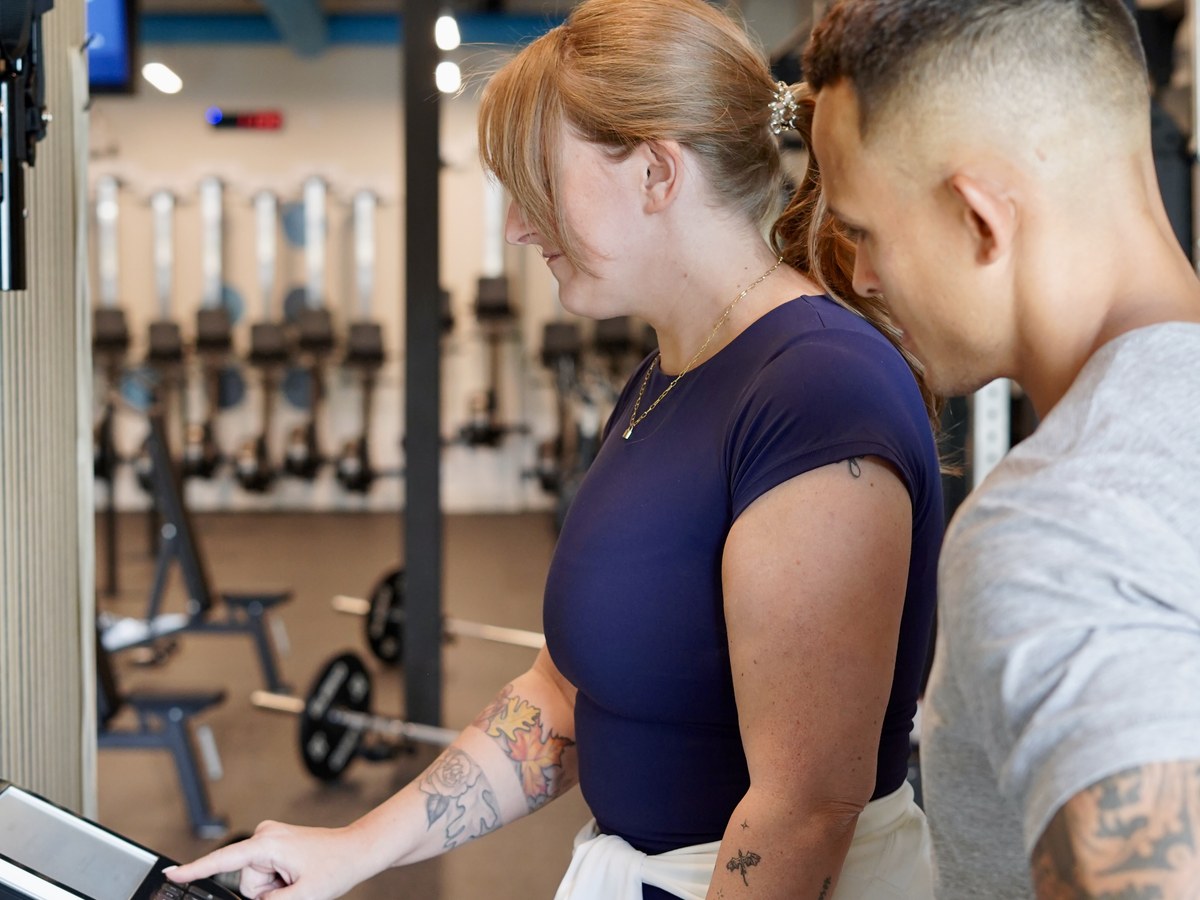
01 · 5 MINUTES
Shoes off, stand on the InBody, hold the grips. The scan itself takes about a minute.
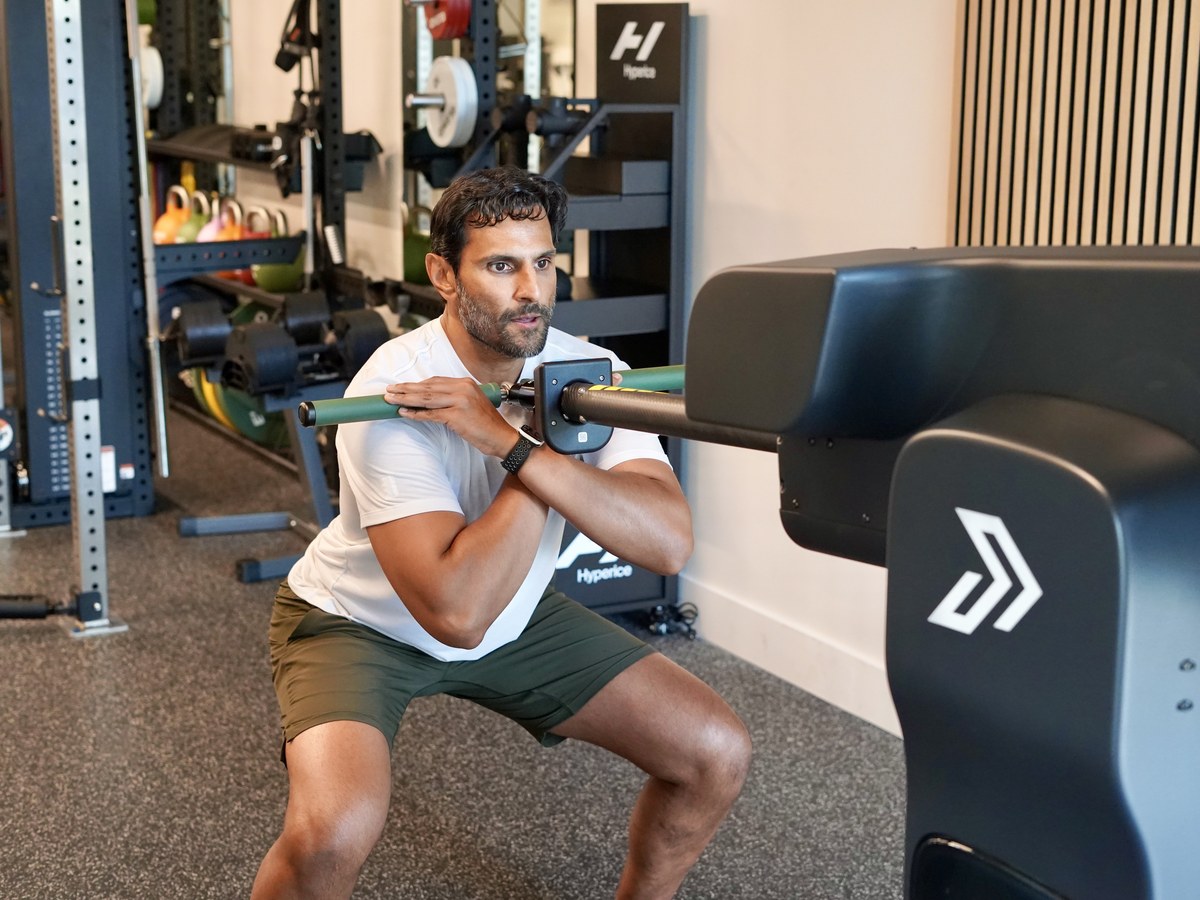
02 · 15 MINUTES
A coach walks you through a short sequence while the camera records how you move. There’s no score to flunk.
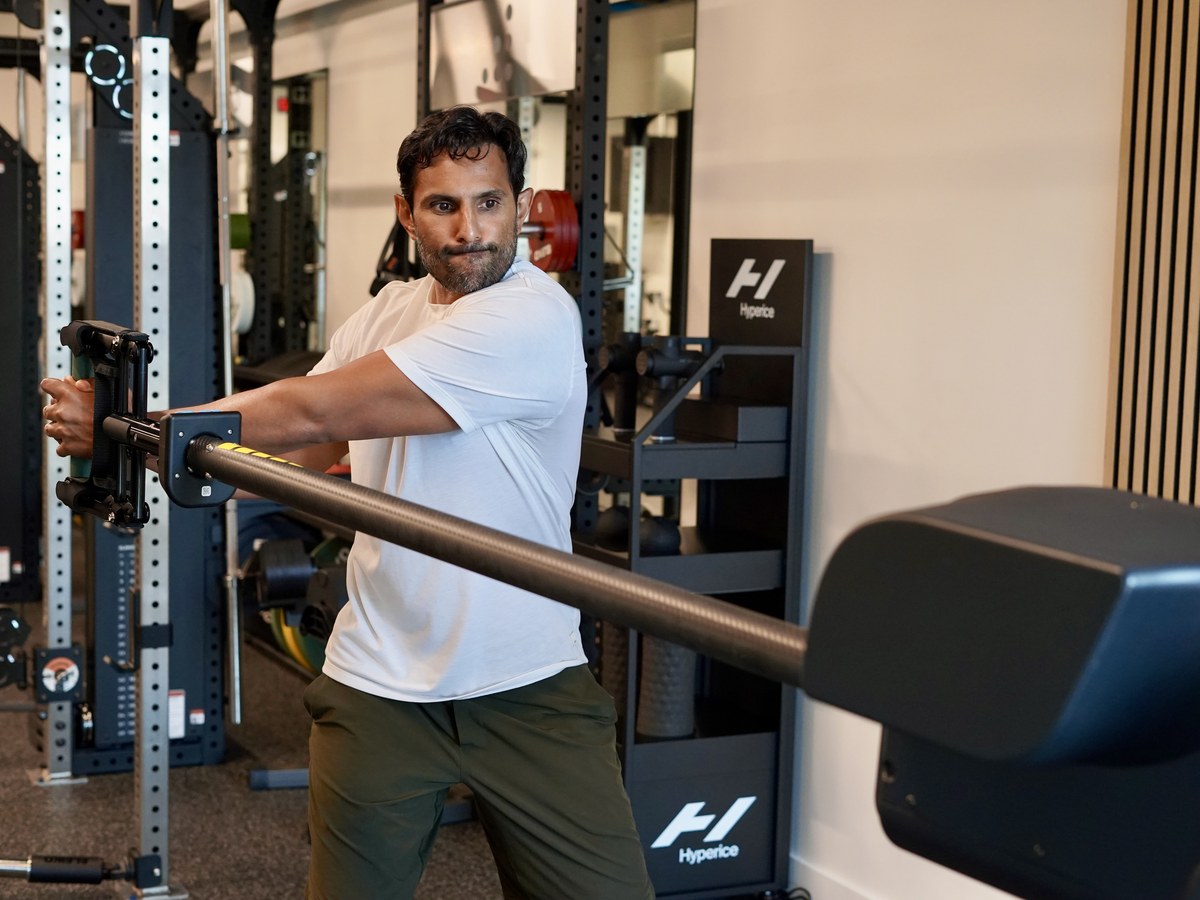
03 · 15 MINUTES
Six movements on Proteus. Short efforts. Total working time is a few minutes.
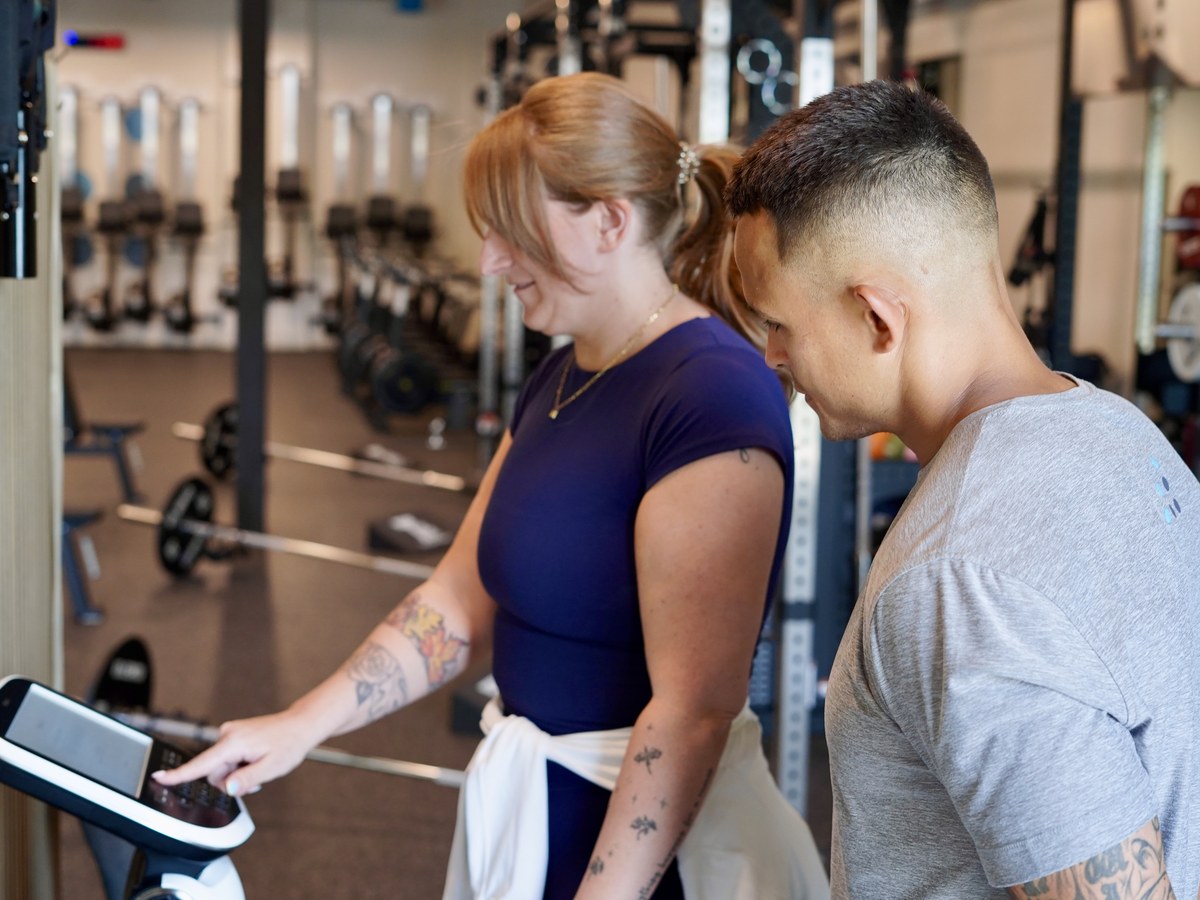
04 · 25 MINUTES
Your coach puts your report on the TV and walks you through it, line by line, until you know what every number means.
Nobody weighs you in front of anybody. Nobody comments on your body. Nobody tells you that you should have started sooner. Your results are confidential, they’re yours, and you can walk out with them and do nothing at all.
3:32 · the whole assessment, start to finish
What you leave with
Every number arrives with what it means, where you sit, and what to do about it. Any term you don’t know is underlined — tap it and it explains itself. Body, Move and Power each end in recommendations, in plain words.
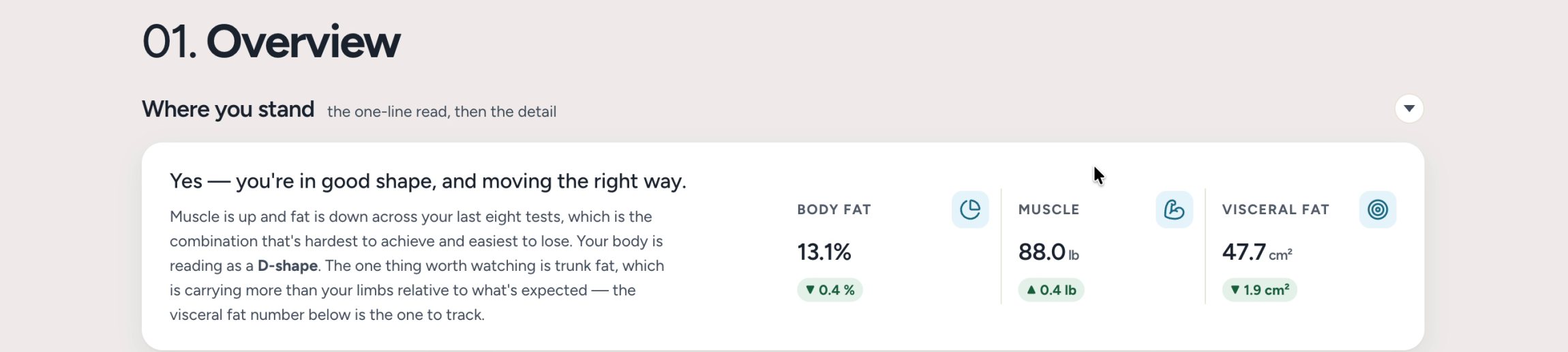
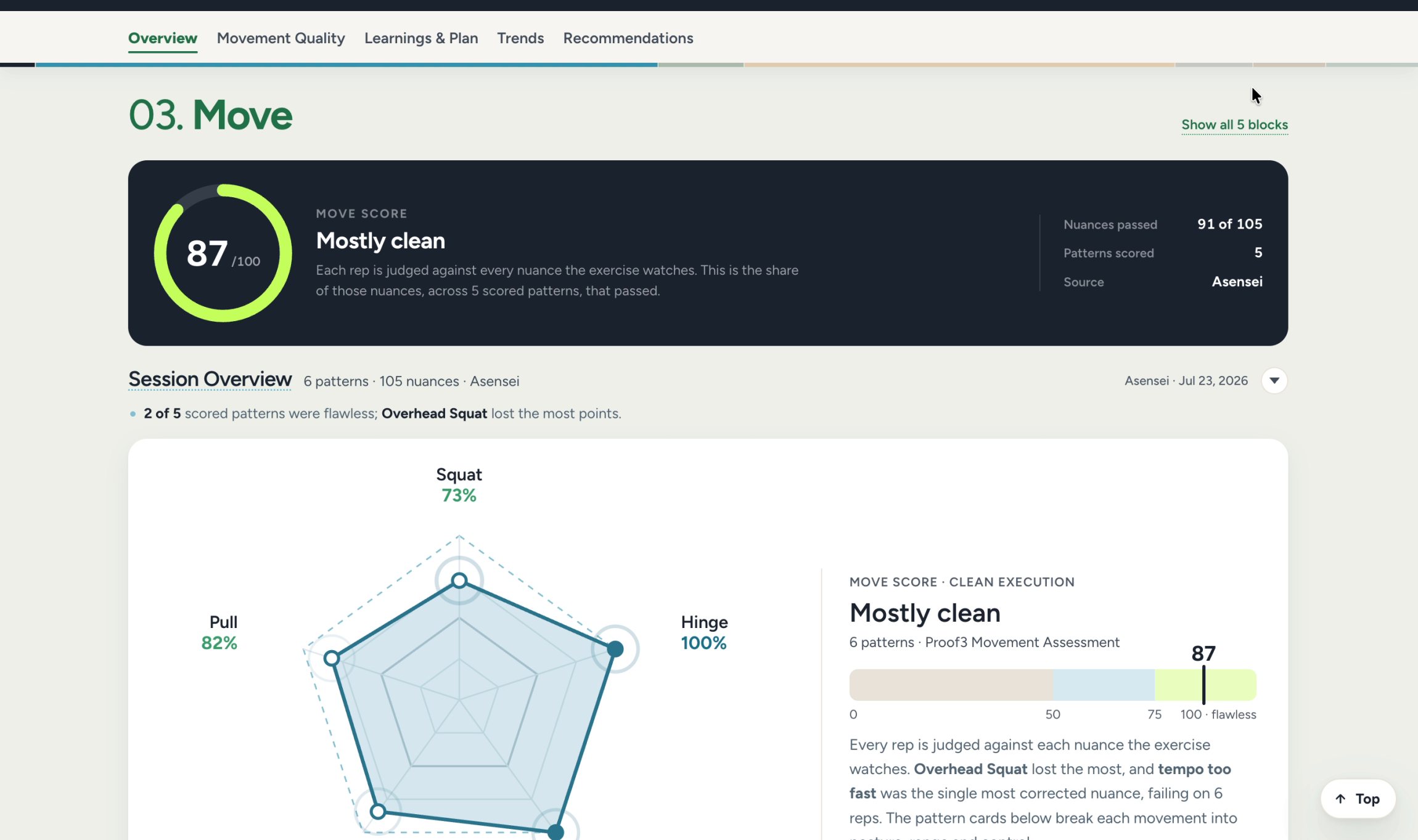
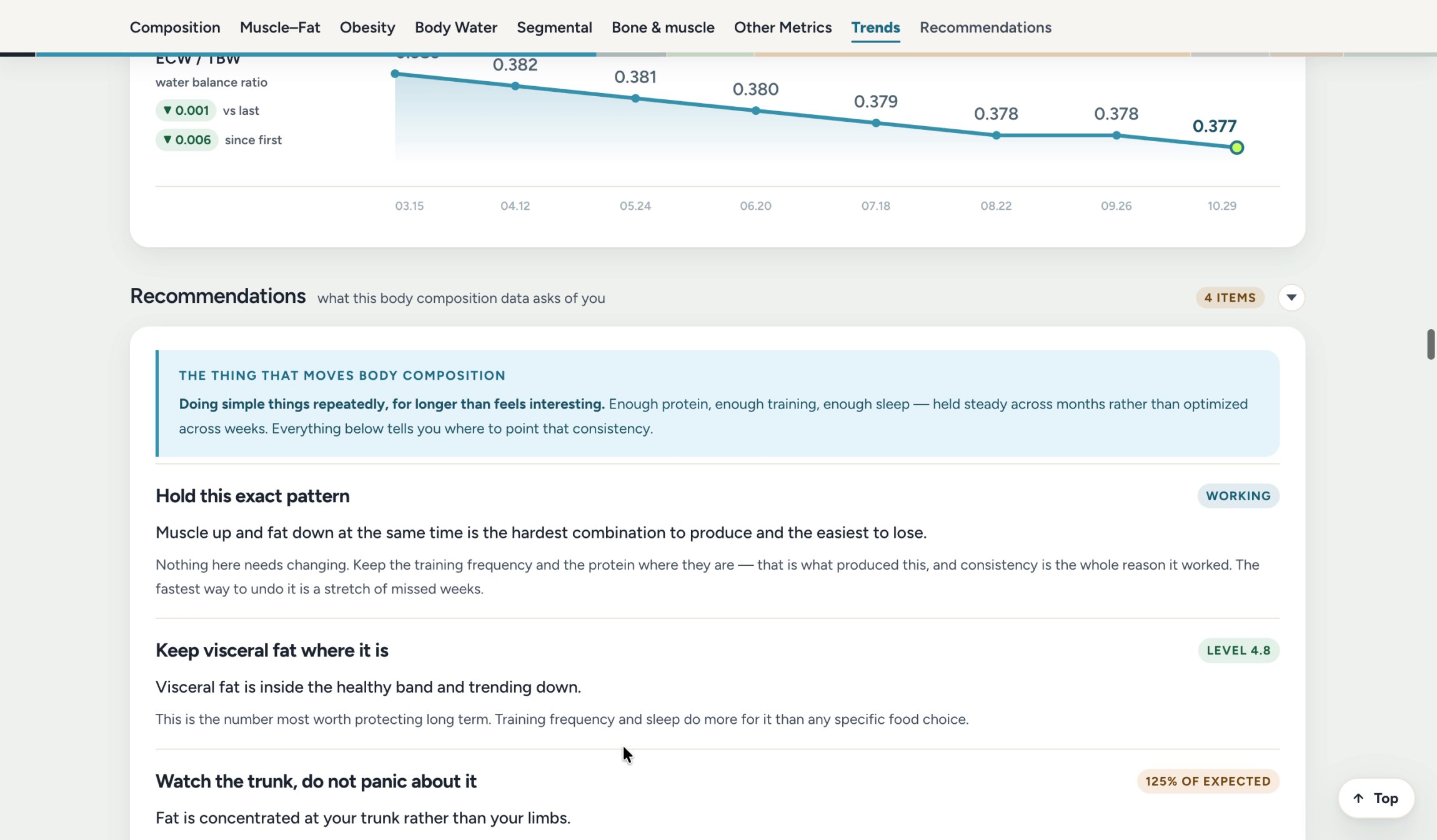
Every term defined in place — nothing to look up.
Save it as a PDF. Search any word in it.
Compare it against your last one, test by test.
1:32 · a coach reading an InBody result out loud
What we do with it
Where you stand, and the three things worth working on first.
Thirty days built from your results — two coached proof3 Assessments, a private 60-minute session, a nutrition and lifestyle strategy, and 30 days of small-group training.
Small-group training, never more than 12, programmed from your numbers.
Same tests, same conditions, every three to six months. Progress as a number that moved.
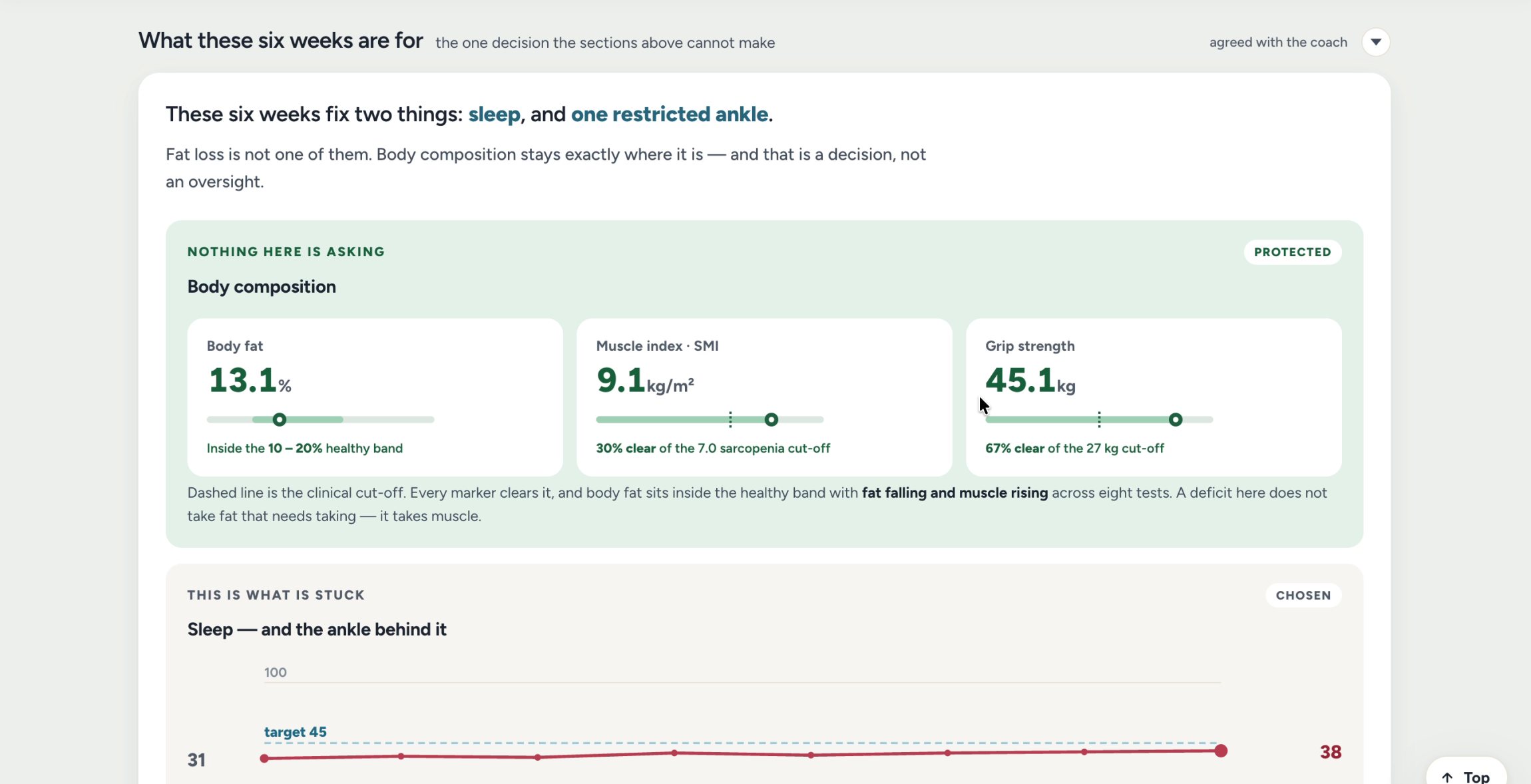
What step 02 looks like on paper — two things to fix, and why
Every step after the first is optional. Some people take the assessment and go train somewhere else. We would rather they had the data.
What it looks like over time
Marcy reassessed on the same three tests, in the same room, on the same equipment. Gaining muscle while losing that much fat, at the same time, is the hardest combination there is.
Skeletal muscle mass
+4.4 lb
48.5 → 52.9 lb · up 9%
Body fat mass
−9.3 lb
43.4 → 34.1 lb · down 21.4%
Visceral fat area
−18.9 cm²
86.2 → 67.3 cm² · down 22%
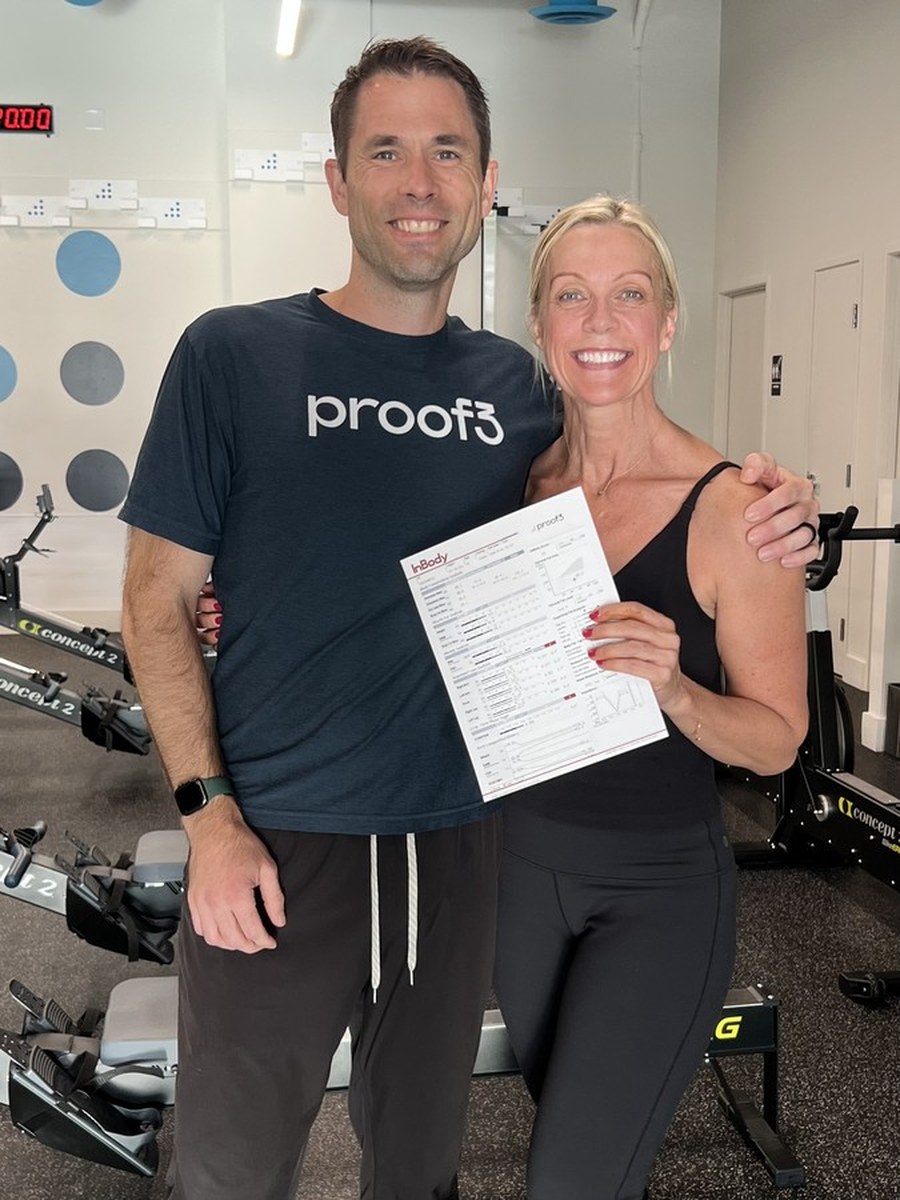
Marcy Morrow · eleven-month reassessment
“I really love the gym environment, but I’m there to build muscle and that’s exactly what I have seen. I replaced many of my Pilates classes with proof3, and I couldn’t be happier about it.”
Marcy Morrow · Real Estate Technology
“The body composition test completely blew my expectations. To see not just gains, but massive gains while working out at a lower volume was a real surprise.”
Sanjeev · proof3 member
1:11 · Sanjeev, after his reassessment
What it costs
Right now: your assessment is free when you start proof30.
$150
All three tests, your report, and a 30-minute coached walkthrough of your results on the screen. Sixty minutes in total.
$100
Body composition and grip strength, then 30 minutes with a coach going through what it means.
The $150 comes off your proof30 if you start within 30 days. Both are one-off. Neither needs a membership.
Common questions
No. The proof3 Assessment is a fitness assessment. It doesn’t diagnose anything, and it isn’t a substitute for seeing your doctor.
There is no fitness requirement and nothing you can fail. The effort portion totals a few minutes and your coach scales it to you.
No. You can buy an assessment on its own, or begin proof30 — two coached proof3 Assessments, a private training session, a nutrition and lifestyle strategy, and 30 days of small-group training.
No pressure. You can take your results and walk away, or use them to start progressing with us.
Wear comfortable clothes and athletic shoes. No need to stretch or warm up beforehand — the assessment is low-impact and guided by a coach throughout.
Your first proof3 Assessment takes about 60 minutes: 30 minutes of testing, then 30 minutes reviewing the results with a coach. Later assessments take 30 to 45 minutes.
Every three to six months. That’s long enough for real change in strength, movement and body composition to show up as a number that moved.
Not at all. Fill in the form and we’ll take care of the rest. Once you start as a member we’ll set you up on the proof3 Member App to follow your assessment and training progress.
Book your assessment
No commitment. A coach will call you back — usually the same day.
An hour, three tests, and a report that tells you what to do next. Whether you train with us afterwards is entirely up to you.