Gyms in Scottsdale, Arizona: How to Choose a Training Environment That Fits Your Goals
A gym can look right on a website and still be wrong for your Tuesday.
Maybe you live in McCormick Ranch and need training to fit between school pickup and dinner. Maybe your workday takes you along Scottsdale Road, while home is farther north in DC Ranch. As fall approaches, your calendar might also include more golf, tennis, October work commitments, or a winter ski trip worth preparing for early.
When comparing gyms in Scottsdale Arizona, start with the life your training needs to fit. Equipment matters. So do coaching, scheduling, and whether anyone can explain how today’s workout connects to your goals.
This guide offers seven criteria for comparing large gyms, boutique studios, group fitness, and coached small-group strength training. There is no universal winner. The aim is to find an environment where you understand the plan, feel comfortable asking questions, and can keep showing up.
For people who want a clearer starting point, proof3 offers assessment-led small-group strength and endurance training, personalized coaching, and progress tracking. Here is how to evaluate that approach alongside your other options.
Understand the Training Environment You’re Buying
These categories overlap. A large gym may offer excellent coaching; a boutique studio may run larger classes. Treat the label as a starting point, then look at what membership actually includes.
Training environmentWho it may suitWhat to confirmLarge gymIndependent exercisers who value equipment choice and flexible accessCoaching costs, busy-hour availability, and help with programmingBoutique studioPeople who enjoy a particular method, atmosphere, or specialized focusHow that specialty supports broader goals and accommodates different abilitiesGroup fitnessPeople who enjoy scheduled workouts, shared energy, and instructor guidanceClass size, exercise alternatives, and whether progress carries between sessionsCoached small-group strength trainingPeople seeking structured training, individual feedback, and shared accountabilityCoach attention, progression, assessment use, and reassessment practices
Price comparisons need the same care. Ask whether the quoted rate includes assessments, coaching conversations, program updates, and all the sessions you expect to attend. Check cancellation, booking, and membership terms before committing.
A lower membership price may fit perfectly if you already know what to do. Additional coaching may be worth paying for if planning and adapting workouts are the parts you need help with.
Comparing Gyms in Scottsdale Arizona: Seven Criteria That Matter
1. Goals: Does the Training Match What You Want?
Start with a useful sentence: “I want to become stronger, understand my progress, and maintain a routine around work.”
That gives you more direction than “I need to get in shape.” Other goals might include developing endurance, learning to lift confidently, or understanding body-composition trends without letting the scale dictate your mood.
Golf, tennis, and skiing can provide helpful context. Tell a prospective coach what you play, how often, and when your next trip or season begins. Ask how those activities would influence the training plan. Avoid assuming that a general class provides sport-specific preparation simply because its marketing mentions athletes.
For general health, adults are advised to include both aerobic activity and muscle-strengthening work. CDC guidance recommends at least 150 minutes of moderate-intensity aerobic activity weekly, or an equivalent vigorous combination, plus strengthening activities on at least two days. These are population guidelines, not a personalized starting prescription. CDC adult activity guidance.
Ask: “How would your program support my priorities, and what would I need to do outside these sessions?”
2. Coaching Attention: Will Someone Help You Learn?
Watch what happens after the instructor demonstrates an exercise.
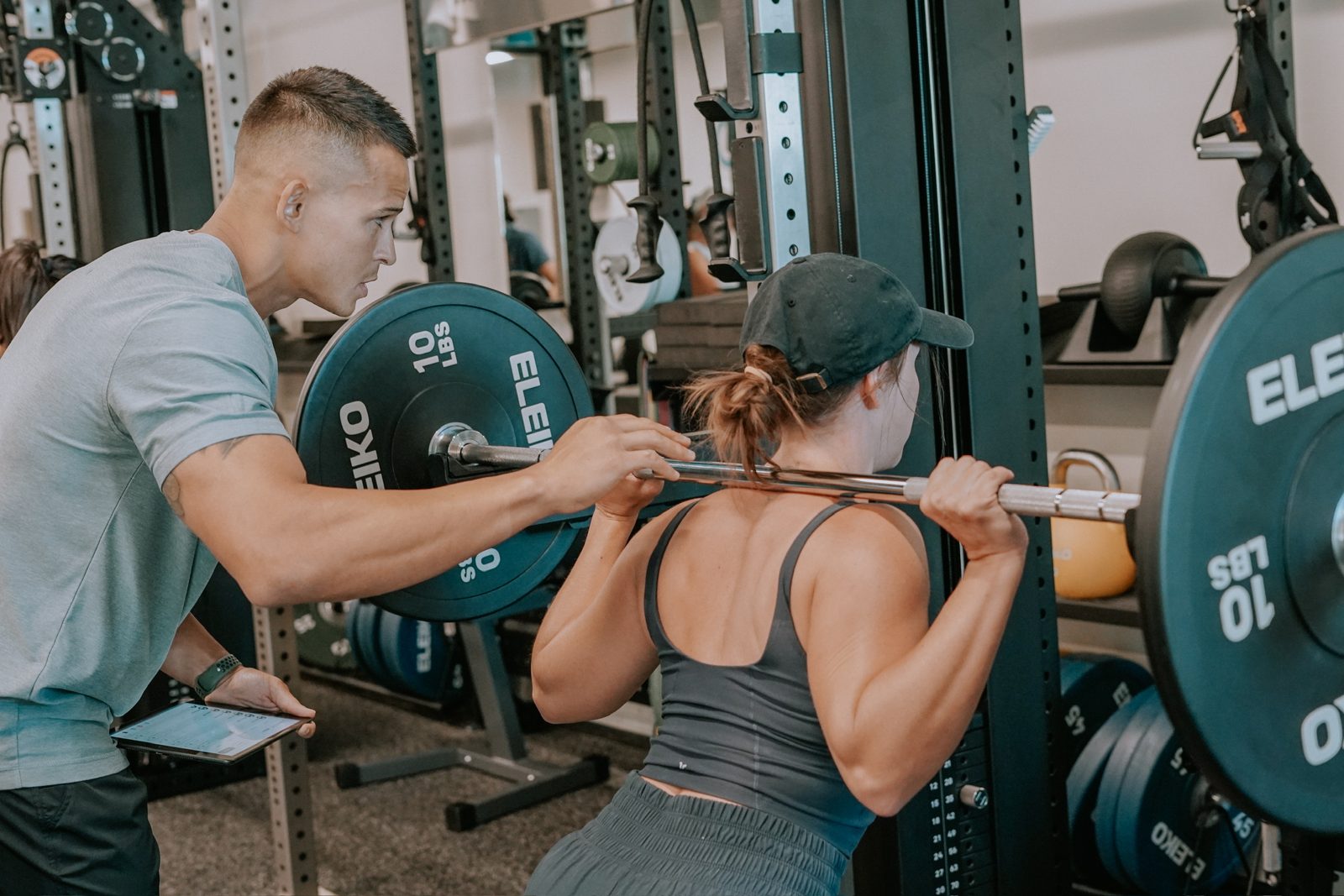
Does someone observe members individually? Explain an adjustment? Help choose an appropriate starting weight? Check whether the change made sense?
Class size matters, but the number alone cannot tell you how attentive the coaching will be. Ask about the coach-to-member ratio, then experience a session at the time you would normally attend.
Also ask about qualifications, experience with people at your starting level, and how coaches handle concerns outside their scope. Clear coaching includes recognizing when a question belongs with a healthcare professional.
Personal attention should feel respectful. You should be able to say that an exercise feels uncomfortable, request another explanation, or choose an alternative without being embarrassed.
Ask: “What happens if I need more help than the rest of the group?”
3. Programming Progression: Is There a Plan Beyond Today?
A workout can be enjoyable and demanding. A training program should also explain what you are practicing and how the challenge develops.
Ask to see how sessions connect across several weeks. Look for opportunities to repeat movements, record performance, and adjust the work as your abilities and circumstances change.
Progression might involve load, repetitions, range of motion, or exercise complexity. The useful question is why a change is appropriate for you. Constant novelty can make comparison difficult, while repeating a movement gives you something recognizable to practice and review.
A program does not need elaborate terminology to be credible. The American College of Sports Medicine’s updated resistance-training guidance emphasizes regular participation and individualization; complex methods are not essential for the average healthy adult. ACSM resistance-training guidance.
Ask: “How do you decide when I should progress, repeat a session, or adjust?”
4. Class Format: Do You Enjoy How the Session Works?
Consider the actual experience: session length, music volume, pace, equipment transitions, and how much instruction you prefer.
Some people love following a shared workout with an energetic instructor. Others want time to ask questions and practice between sets. Neither preference needs defending.
If strength is a priority, ask how much time is devoted to resistance training and whether the format allows appropriate rest and coaching. If endurance matters too, ask how it is incorporated.
At proof3, the flagship 30/30 format combines 30 minutes of progressive strength training with 30 minutes of focused endurance work in a small-group setting. That offers a concrete format to compare with your preferences and available time. Explore proof3’s training approach.
Ask: “Can I try the format I would actually attend before choosing a membership?”
5. Schedule and Location: Can This Work on an Ordinary Week?
In Scottsdale, proximity deserves more thought than a mileage estimate.
A location that works from McCormick Ranch may fit very differently into a day starting in Grayhawk. If your routine runs along Hayden Road or Shea Boulevard, evaluate the gym against that route. An appealing facility across town still needs to fit between your existing commitments.
Try the drive at your intended training time. Include parking, check-in, the session, and getting back to work or home. Then identify a backup class for the week a meeting runs late.
proof3 Salt River lists its location at 9220 E Via de Ventura, Suite 121. Use that address to check your own route rather than assuming a particular commute. proof3 location details.
For frequent travel, ask how coaching continues away from the gym. Our guide to Online Coaching benefits explores another format to consider.
Ask: “Which two realistic appointment windows could I protect most weeks?”
6. Measurement: Will the Numbers Help You Make Decisions?
Useful measurement starts with the question you want answered.
If your goal is strength, a record of exercises, repetitions, and loads provides something specific to review. If consistency is the challenge, attendance may be the first measure worth discussing. Endurance benchmarks should have a clear protocol so repeated results are meaningfully comparable.
Body-composition information needs additional context. Bioelectrical impedance devices, including InBody systems, estimate body composition. Their outputs should not be treated as exact inventories of muscle and fat. Research comparing an InBody device with DXA found differences between the methods, underscoring the importance of interpretation. Body-composition comparison study.
Hydration and testing conditions can also influence results. Follow the facility’s preparation instructions and aim for consistent conditions when repeating a test. InBody testing guidance.
A fitness assessment is not a medical diagnosis. Ask a coach to explain uncertainty, what a trend might mean, and what additional context is needed before changing the plan.
Ask: “What decision would you make differently because of this measurement?”
7. Community: Do You Feel Comfortable Returning?
Pay attention to the welcome.
Does someone learn your name? Explain where things are? Introduce you without putting you on the spot? Are questions welcomed when the room gets busy?
Community can mean conversation and friendships. It can also mean being recognized, treated kindly, and allowed to focus quietly. You do not need to become the most outgoing person in the room to belong.
Observe how the staff responds to different abilities and missed sessions. Look for practical support and respectful language. Decide whether the environment’s approach to competition, body image, and encouragement suits you.
For ideas about making attendance more repeatable, read our Science of Habit Formation article.
Ask: “Would I feel comfortable coming back here after a difficult week?”
Why an Assessment Can Reduce Guesswork
Without a starting conversation and baseline, a coach has less information for choosing where to begin. An assessment can organize that information, provided the results are interpreted and used.
Its value lies in connecting three things: what matters to you, what you can currently do, and what training makes sense next.
Establish a Starting Point
A useful intake should cover your goals, training history, current activity, relevant limitations, and schedule. Movement observations and performance measures can add context.
At proof3, the proof360 assessment includes body-composition information, movement analysis, strength and power testing, and lifestyle context. Learn what happens at a proof3 assessment.
You should leave understanding the findings in plain language. A dashboard is helpful only if someone explains which information matters for your next steps.
Turn Information Into a Manageable Plan
Imagine two people arriving with the same goal: getting stronger.
One already trains regularly but wants clearer progression. The other is returning after a long break and needs help choosing exercises and establishing attendance. Their starting plans should reflect those differences.
The same applies to fall activities. A tennis player balancing matches with training, a golfer planning regular rounds, and someone preparing early for a ski trip bring different schedules and priorities. An assessment gives those conversations a starting structure.
Revisit the Plan Honestly
Ask when results will be reviewed and how the coach will decide whether to adjust.
An assessment does not eliminate uncertainty or guarantee progress. It can make decisions more transparent by creating a baseline, recording the work, and establishing a process for review.
That is the practical meaning of proof over promises: measure what is relevant, explain the limits, and respond to what the information shows.
A Short Checklist for Your First Visit
Bring these questions to each facility so the comparison stays consistent:
- What is included in the membership price?
- Who will coach me, and how much individual attention can I expect?
- How does the program develop over time?
- What happens when I need an exercise adjustment?
- Can I attend reliably, including during a busy workweek?
- What is measured, and how will we review it?
- Do I feel heard and comfortable here?
If October workplace wellness conversations are part of your role, these questions can also help you evaluate an approach before discussing it with colleagues. Keep individual goals and comfort central; coworkers will not necessarily want the same training experience.
Frequently Asked Questions
Is a Large Gym or Small-Group Training Better for Beginners?
Either can suit a beginner. The deciding factors are available instruction, an understandable starting plan, and comfort asking for help. A large gym may offer an orientation or personal training. Coached small-group training may suit someone who wants scheduled instruction and shared sessions. Try the actual service you would purchase and observe how beginners are supported.
Is Coached Small-Group Training Worth the Added Cost?
Compare the services you will use. If you need help planning workouts, learning movements, and reviewing progress, included coaching may offer practical value. If you already train confidently and primarily need equipment access, a standard gym membership may fit. Request the full price, included services, and membership terms before deciding.
Do I Need to Get Fit Before Booking a proof3 Assessment?
You do not need to reach a performance milestone before asking about an assessment. Its purpose is to understand your starting point. Share relevant health concerns, limitations, and training history beforehand so the team can discuss suitability and any needed clinical guidance. proof3 also offers assessments separately from membership, allowing you to begin with information. proof3 assessment details.
Choose a Starting Point You Can Build On
Your training environment should fit the person you are today and the routine you can realistically maintain.
As you plan around fall golf, tennis, October meetings, or a winter ski trip, look for clear coaching, useful measurement, and people who listen. You deserve to understand what you are doing and how progress will be reviewed.
Book a proof3 assessment and experience small-group strength training in Scottsdale.
Interested in starting your fitness journey? Schedule your assessment at proof3 Salt River today!