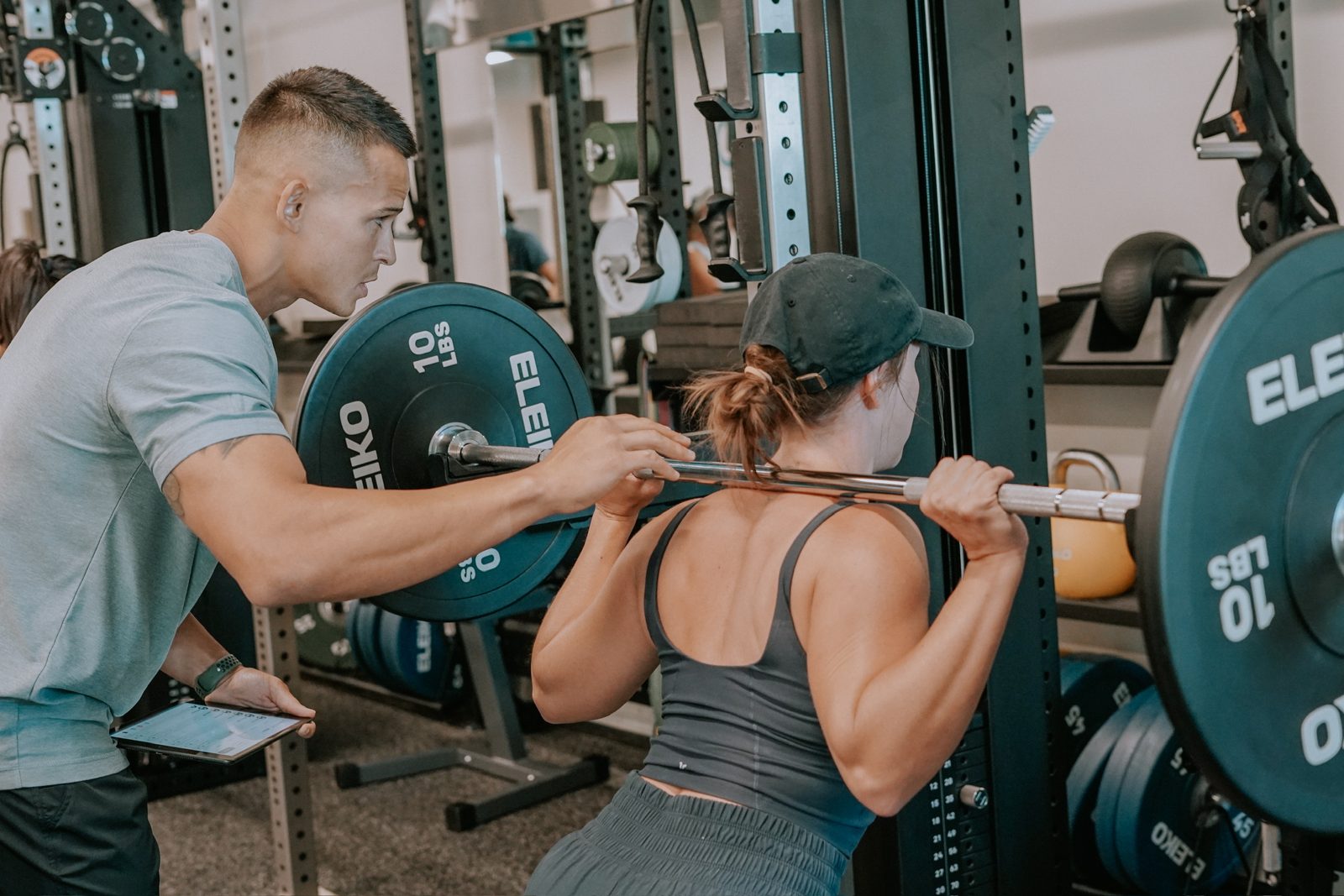
Recovery after strength training after 50 means allowing time between demanding sessions and adjusting the next workout to how you’re feeling. The principles are similar for everyone, but how much recovery you need varies from person to person and with how much and how hard you train. Plan around your other activities as well as your gym sessions.
You may want to lift regularly and still enjoy tennis, golf or a weekend hike. Looking at the whole week helps you decide where harder training belongs and where a lighter day makes sense.
How much time should you leave between sessions?
The CDC and Tufts strength-training guide for older adults schedules strength sessions on nonconsecutive days to allow rest. That provides a useful starting point, but it doesn't mean everyone is ready for another hard session after the same number of hours.
Discuss the exercises, effort and other activities in your week with your coach. If you train on consecutive days, ask how the work will differ. If you’re unusually fatigued or movement is uncomfortable, bring that up before repeating a demanding session.
What does soreness tell you?
Delayed-onset muscle soreness is discomfort that develops after exercise, often after an unfamiliar or harder activity. It can build over the following one to three days. You can also have a productive workout without becoming sore, so soreness is not a reliable score for how much progress you made.
Pain during an exercise deserves a different response. Stop the painful movement rather than trying to work through it. Seek health-care advice for severe pain, swelling, difficulty bearing weight, or symptoms that persist or worsen. Your coach can discuss training changes, but cannot diagnose the cause.
Make the basics part of your week
Keep sleep, regular meals and hydration in the conversation alongside your training schedule. If medication or a health condition affects those habits, follow your care team's guidance rather than adopting a generic supplement or fluid plan.
A recovery day can be a break from demanding training, with comfortable everyday activity if it suits you. It doesn't need to become another challenging workout or a shopping list of recovery equipment.
Use coaching to adjust the plan
At proof3 Salt River in Scottsdale, we use assessment information and your experience in coached sessions to guide training. Tell us how you feel between visits and which other activities you want room for.
Before your next session, ask whether to keep the planned effort, change the exercises or take more time. The aim is a routine you can return to, with strength training and the rest of your life working together.
Common questions about recovery after 50
How do I tell normal soreness from an injury?
Delayed soreness builds over one to three days after unfamiliar or harder work. Pain during an exercise is different: stop that movement, and seek health-care advice for severe pain, swelling, difficulty bearing weight or symptoms that persist or worsen.
How much rest do I need between strength workouts after 50?
Scheduling demanding strength sessions on nonconsecutive days is a useful starting point. Then adjust to how much and how hard you’re training, how you feel and your other activities; age alone doesn’t set the interval.
Drop by and see us at our Salt River studio, call us at (520) 524-6983 or send a message to info@proof3.com. We’d love to hear what you’re working toward.
Live Stronger For Longer
Replace guesswork with data-driven strength and endurance training built around how your body actually moves.
No commitment. A coach will call you back — usually the same day.