Progressive overload means gradually increasing the demands of strength training as you adapt. Adding weight is one option; changing repetitions, the amount of work or the exercise can also change the challenge. The decision should fit your goals and how you’re performing.
At proof3 Salt River in Scottsdale, your coach uses your starting assessment, your experience during sessions and reassessment to guide those decisions. You don't need to guess when it's time to reach for something heavier.
What can change besides the weight?
Ask your coach which part of the exercise you’re working on. The possibilities include:
- Resistance: using a different weight or level of resistance.
- Repetitions: changing how many times you perform the movement.
- Sets: changing the amount of work across the exercise.
- Range of motion: working through an appropriate movement range with control.
- Exercise variation: moving to a version with different demands.
These are different decisions, not a checklist to increase all at once. Practicing technique may be the priority before making an exercise harder.
When does adding more make sense?
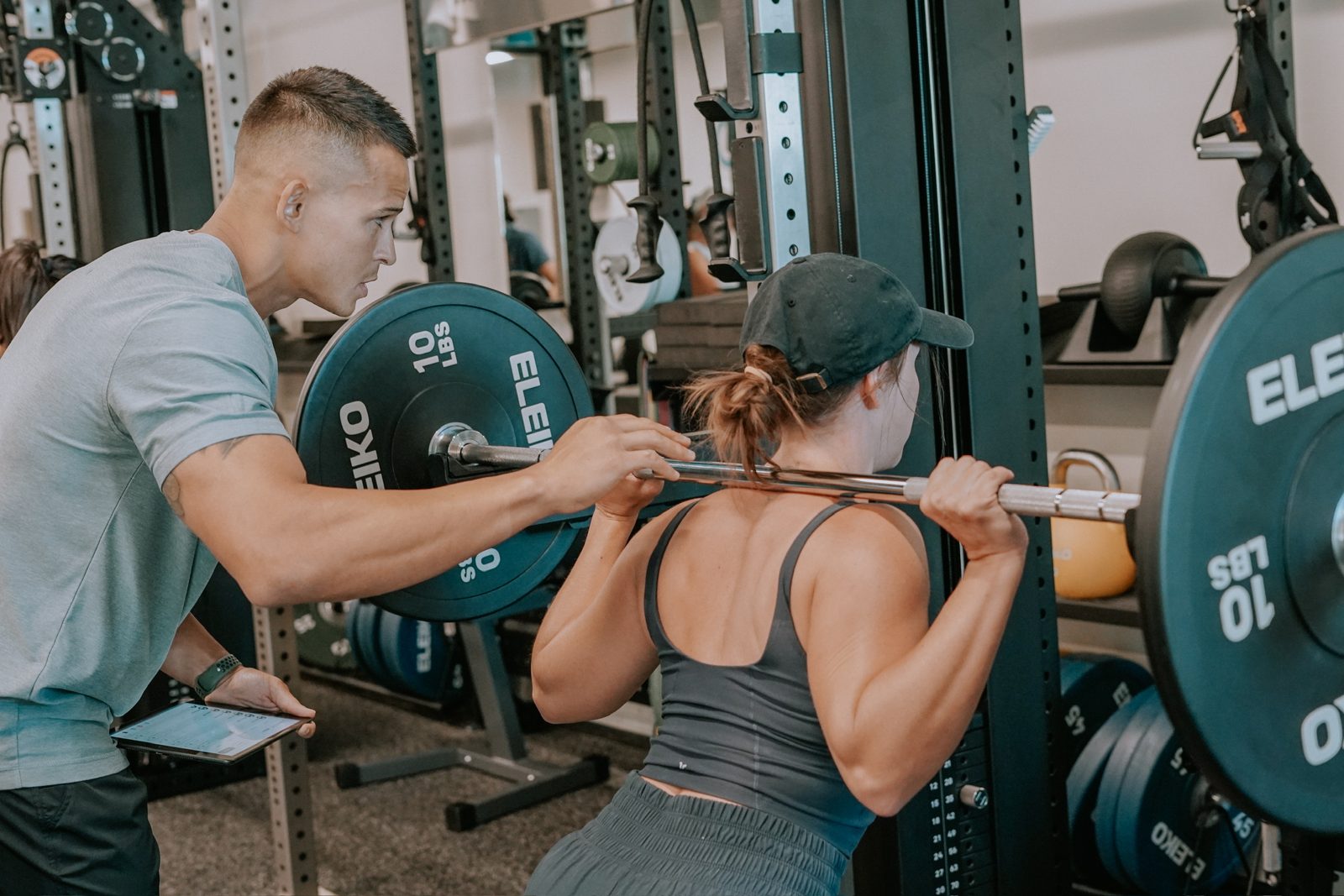
Your coach can watch how you complete the planned work, discuss how demanding it feels and check whether you can maintain the intended movement. If the current task is manageable, you can discuss an appropriate next change.
Tell your coach about the rest of your week, too. A hard tennis match, a hiking weekend or disrupted sleep adds context that a weight on its own cannot provide.
When should you hold steady?
Keeping the resistance the same can make sense while learning an unfamiliar movement, returning after time away or discussing fatigue. You can use that session to practice the task rather than force an increase.
If an exercise causes pain, stop and tell your coach. Pain and injury questions need appropriate health-care guidance, not a harder version of the exercise.
Common questions about progressive overload
Do I need to add weight every session? No. Progression is planned over time; it isn't a requirement to beat your last workout each visit.
Why track changes? A record helps you and your coach understand which demand changed and whether comparisons are meaningful.
What if I’m not getting stronger? Review attendance, the work you’ve actually been doing, exercise technique and recovery with your coach. A pause in progress is a reason to investigate the plan, not automatically add more weight.
Drop by and see us at our Salt River studio, call us at (520) 524-6983 or send a message to info@proof3.com. We’d love to hear what you’re working toward.
Live Stronger For Longer
Replace guesswork with data-driven strength and endurance training built around how your body actually moves.
No commitment. A coach will call you back — usually the same day.