To tell whether strength training is working, compare what you can do in the same exercises over time: the resistance, repetitions and quality of movement. At proof3 Salt River in Scottsdale, we review training alongside repeat assessments so you have more than a feeling to go on.
If you’ve been showing up regularly, it’s reasonable to want a clear answer about what is changing. A heavier weight can be one sign, but it helps to understand the conditions behind the comparison.
Compare like with like
Choose a few exercises from your program and record the resistance, repetitions and how demanding the work felt. Note the equipment and exercise variation, too. Changing from one machine or movement to another makes a direct comparison less useful.
For example, completing more repetitions with the same dumbbells and the same controlled movement is worth discussing with your coach. Using heavier dumbbells while shortening the movement tells a different story. Those are illustrative examples, not targets for your next session.
Separate strength from body-composition changes
Body weight and estimated muscle mass don't directly tell you how much force you can produce. Use them as additional information, rather than substitutes for performance in your exercises or strength testing.
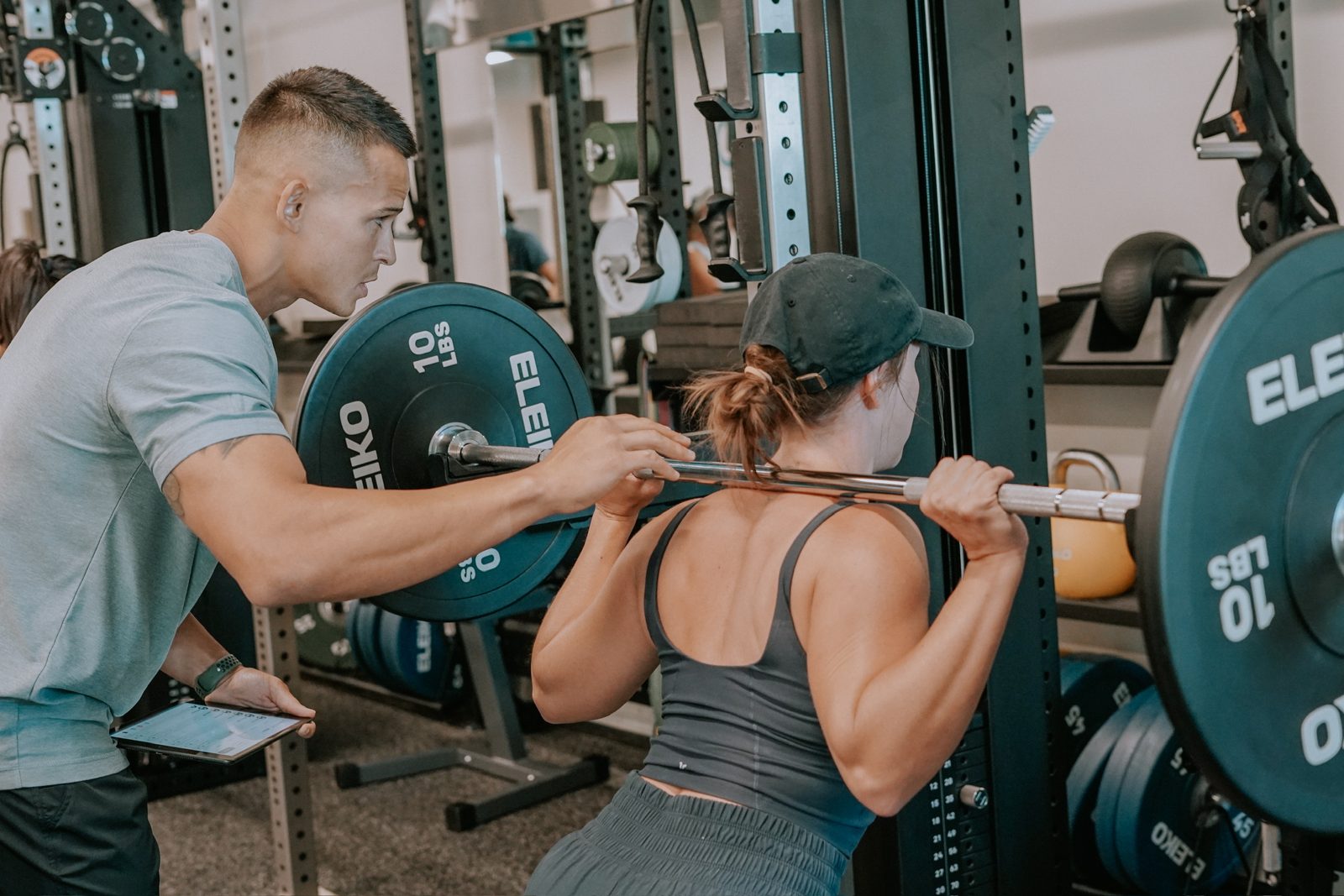
Our proof3 Assessment includes body-composition, movement, and strength and power information. Your coach explains which results relate to your goals and what we will repeat to review changes.
Look at the pattern, then discuss the plan
Bring several comparable sessions to the conversation. Ask whether the work has become more manageable, whether resistance or repetitions have changed, and whether you’ve been able to train as planned. Include context such as a disrupted routine or poor sleep.
If the pattern is unclear, ask your coach what to keep consistent and what to review next. That gives you a useful decision without assuming that one difficult session means the whole program has stopped working.
How long should it take to notice progress?
There isn't one deadline that applies to every person or every measure. Agree with your coach on what you're tracking and when you'll review it. Learning an exercise, increasing its resistance and changing estimated body composition are different developments; they don't have to happen together.
What should you ask at proof3?
Ask us three things: Which measures match my goal? What are we comparing them with? What would lead us to adjust my training? Clear answers help connect the work you do in the studio with the activities you care about.
Common questions about tracking strength progress
Which measures should I track to know I’m getting stronger?
Track a few exercises from your program: the resistance, repetitions and how demanding they felt, using the same equipment and variation. Repeat assessments add body-composition, movement and strength-and-power context.
Does a heavier weight always mean progress?
Not always. Compare like with like: a heavier weight with a shorter movement tells a different story from more repetitions with the same weight and control.
Drop by and see us at our Salt River studio, call us at (520) 524-6983 or send a message to info@proof3.com. We’d love to hear what you’re working toward.
Live Stronger For Longer
Replace guesswork with data-driven strength and endurance training built around how your body actually moves.
No commitment. A coach will call you back — usually the same day.