How to Build Muscle Mass: The Evidence-Based Strength-Training Fundamentals That Actually Matter
Muscle growth, or hypertrophy, happens when muscle protein synthesis (MPS) outpaces muscle protein breakdown over weeks and months. Resistance training supplies the stimulus. Protein, sleep and consistency decide how well your body responds to it. A decade of controlled research has made clear which training variables drive results and which matter far less than gym lore suggests.
This guide covers what the evidence says about progressive overload, technique, recovery, nutrition and adherence, with practical targets for busy adults in Scottsdale who want to build strength and improve body composition.
How Muscle Actually Grows
Mechanical tension, the force a muscle produces against a load, is the primary signal for hypertrophy. A single resistance-training session raises MPS for roughly 24 to 48 hours (MacDougall et al., 1995). Each session adds a small net gain in muscle protein, and those gains compound only when training is repeated consistently and the body has the protein and recovery it needs to build new tissue.
That is why every fundamental below comes back to two questions: is the muscle being challenged enough, and is it being given what it needs to adapt?
Progressive Overload: The Core Stimulus
Progressive overload means gradually increasing the demand on a muscle over time so it keeps adapting. Adding weight is one way to do it, but research shows several variables can drive the process.
Load. A meta-analysis by Schoenfeld et al. (2017) found that light loads (60% of one-rep max or less) and heavy loads produce similar muscle growth when sets are taken close to failure. Heavy loads still produce greater gains in maximal strength. For hypertrophy, effort matters more than the number on the bar.
Volume. Weekly training volume shows a dose-response relationship with growth. Performing 10 or more hard sets per muscle group per week produced greater hypertrophy than fewer than 5 sets (Schoenfeld, Ogborn & Krieger, 2017).
Effort. A 2024 meta-regression found that muscle growth increases as sets are taken closer to failure, while strength gains are less sensitive to proximity to failure (Robinson et al., 2024). Ending most sets with 1 to 3 reps still in the tank is a practical, evidence-based target.
Frequency. Training each muscle twice per week is a practical way to spread that volume out. When total weekly volume is equal, research shows frequency itself has little effect on growth (Schoenfeld, Grgic & Krieger, 2019), so choose the schedule you can sustain.
In practice, overload means tracking your workouts and nudging one variable at a time: an extra rep, a few more pounds, or an extra set. Individual responses vary, which is why a structured, measured plan beats guesswork.
Technique: Effective Reps, Lower Risk
Good technique keeps tension on the target muscle and reduces injury risk, which protects the consistency progress depends on.
Range of motion. Systematic reviews indicate that training through a full range of motion, particularly with the muscle loaded at long lengths, produces equal or greater hypertrophy than partial reps (Pallarés et al., 2021).
Tempo. Repetition durations from about 0.5 to 8 seconds produce similar muscle growth (Schoenfeld, Ogborn & Krieger, 2015). Super-slow reps offer no added benefit. A controlled lowering phase and a deliberate lift are enough.
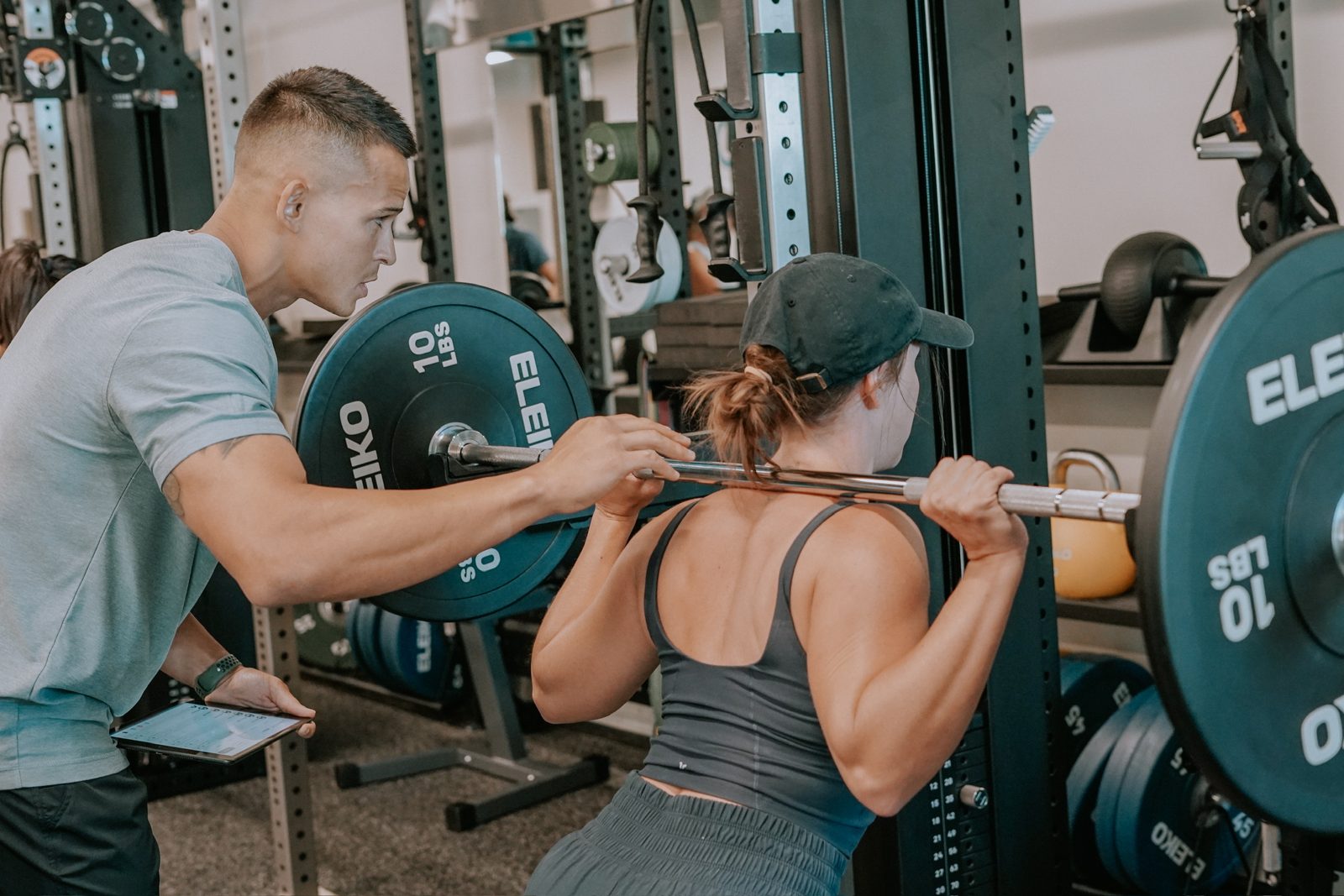
Whether you train at a gym in Scottsdale or at home, working with a qualified coach is one of the most reliable ways to learn proper form and adjust exercises to your mobility, injury history and goals.
Recovery: Where Adaptation Happens
Training provides the signal, but muscle is built during recovery.
Sleep. One night of total sleep deprivation reduced post-meal muscle protein synthesis by 18% in a controlled trial (Lamon et al., 2021). Adults should aim for at least 7 hours of sleep per night, in line with sleep-medicine consensus guidelines (Watson et al., 2015).
Rest between sessions. Training a muscle again before it has recovered can reduce performance and the quality of your next session. Planned rest days and active recovery strategies such as walking or mobility work help manage fatigue.
Muscle damage is not the goal. Research tracking new lifters found that early increases in muscle size were partly swelling from damage. True hypertrophy correlated with protein synthesis only once that damage subsided (Damas et al., 2016). Sessions that leave you wrecked are not more productive.
Nutrition: Fueling Growth
Protein. A meta-analysis of 49 randomized trials found that protein intake beyond about 1.6 g per kilogram of body weight per day produced no further gains in lean mass, with an upper confidence limit of 2.2 g/kg (Morton et al., 2018). For a 180-pound (82 kg) adult, that is about 130 grams per day.
Distribution. Spreading protein across 3 to 4 meals of roughly 0.4 g/kg each helps maximize MPS, and this matters more as we age because older adults need a larger per-meal dose to get the same response (Moore et al., 2015). For the 180-pound example, that means about 30 to 35 grams of protein per meal.
Energy intake. A modest calorie surplus supports muscle gain. Beginners and people returning to training can often build muscle while losing fat (body recomposition) at maintenance calories, provided protein is adequate.
Creatine. Creatine monohydrate at 3 to 5 grams per day is one of the most researched supplements, with consistent evidence that it improves training adaptations in strength and lean mass (Kreider et al., 2017).
Adherence: The Variable That Multiplies the Rest
The best program is the one you follow for months and years. Habit research found it took a median of 66 days for a new behavior to become automatic, with a range of 18 to 254 days depending on the person and the habit (Lally et al., 2010). Expect the first two months to require deliberate effort.
For busy adults, two to three full-body sessions of 45 to 60 minutes per week can deliver the 10-plus weekly sets per muscle group that research links to strong results. Anchor workouts to a fixed time, such as before work or right after, and build a routine that fits your lifestyle rather than one that fights it.
Myth vs. Reality
Myth: Soreness means it worked. Delayed-onset muscle soreness mainly reflects unfamiliar exercise and fades as your body adapts to a movement (the repeated-bout effect). It is a poor indicator of muscle growth (Damas et al., 2016).
Myth: Light weights cannot build muscle. Light loads taken close to failure build similar muscle to heavy loads (Schoenfeld et al., 2017). They are a useful option for joint-friendly training.
Myth: You must eat protein within 30 minutes of training. When total daily protein is matched, the timing of the post-workout meal has little effect on hypertrophy (Schoenfeld, Aragon & Krieger, 2013). Hitting your daily target matters most.
Myth: It is too late to build muscle after 50. A meta-analysis of adults over 50 found resistance training increased lean body mass by an average of about 1.1 kg over roughly 20 weeks (Peterson, Sen & Gordon, 2011). The ability to build muscle persists with age; it simply rewards consistency and adequate protein.
Myth: Big transformations happen in weeks. Measurable gains in strength often appear within the first few weeks, largely from improved coordination between the nervous system and muscles. Visible changes in muscle size build over months of consistent training.
The evidence points to a short list of fundamentals: train each muscle with enough hard sets each week, take those sets close to failure, progress gradually, use full range of motion, sleep at least 7 hours, eat about 1.6 g/kg of protein spread across your meals, and stay consistent long enough for the results to compound.
If you are ready to put these principles to work, schedule an assessment with our team. We will measure where you are today and build a personalized strength plan that fits your abilities, your schedule and your goals.
References
- Damas, F., et al. (2016). Resistance training-induced changes in integrated myofibrillar protein synthesis are related to hypertrophy only after attenuation of muscle damage. Journal of Physiology, 594(18), 5209–5222.
- Kreider, R. B., et al. (2017). International Society of Sports Nutrition position stand: safety and efficacy of creatine supplementation in exercise, sport, and medicine. Journal of the International Society of Sports Nutrition, 14, 18.
- Lally, P., et al. (2010). How are habits formed: Modelling habit formation in the real world. European Journal of Social Psychology, 40(6), 998–1009.
- Lamon, S., et al. (2021). The effect of acute sleep deprivation on skeletal muscle protein synthesis and the hormonal environment. Physiological Reports, 9(1), e14660.
- MacDougall, J. D., et al. (1995). The time course for elevated muscle protein synthesis following heavy resistance exercise. Canadian Journal of Applied Physiology, 20(4), 480–486.
- Moore, D. R., et al. (2015). Protein ingestion to stimulate myofibrillar protein synthesis requires greater relative protein intakes in healthy older versus younger men. Journals of Gerontology: Series A, 70(1), 57–62.
- Morton, R. W., et al. (2018). A systematic review, meta-analysis and meta-regression of the effect of protein supplementation on resistance training-induced gains in muscle mass and strength in healthy adults. British Journal of Sports Medicine, 52(6), 376–384.
- Pallarés, J. G., et al. (2021). Effects of range of motion on resistance training adaptations: A systematic review and meta-analysis. Scandinavian Journal of Medicine & Science in Sports, 31(10), 1866–1881.
- Peterson, M. D., Sen, A., & Gordon, P. M. (2011). Influence of resistance exercise on lean body mass in aging adults: A meta-analysis. Medicine & Science in Sports & Exercise, 43(2), 249–258.
- Robinson, Z. P., et al. (2024). Exploring the dose–response relationship between estimated resistance training proximity to failure, strength gain, and muscle hypertrophy: A series of meta-regressions. Sports Medicine, 54, 2209–2231.
- Schoenfeld, B. J., Aragon, A. A., & Krieger, J. W. (2013). The effect of protein timing on muscle strength and hypertrophy: A meta-analysis. Journal of the International Society of Sports Nutrition, 10, 53.
- Schoenfeld, B. J., Ogborn, D. I., & Krieger, J. W. (2015). Effect of repetition duration during resistance training on muscle hypertrophy: A systematic review and meta-analysis. Sports Medicine, 45(4), 577–585.
- Schoenfeld, B. J., Ogborn, D., & Krieger, J. W. (2017). Dose-response relationship between weekly resistance training volume and increases in muscle mass: A systematic review and meta-analysis. Journal of Sports Sciences, 35(11), 1073–1082.
- Schoenfeld, B. J., Grgic, J., Ogborn, D., & Krieger, J. W. (2017). Strength and hypertrophy adaptations between low- vs. high-load resistance training: A systematic review and meta-analysis. Journal of Strength and Conditioning Research, 31(12), 3508–3523.
- Schoenfeld, B. J., Grgic, J., & Krieger, J. (2019). How many times per week should a muscle be trained to maximize muscle hypertrophy? A systematic review and meta-analysis. Journal of Sports Sciences, 37(11), 1286–1295.
- Watson, N. F., et al. (2015). Recommended amount of sleep for a healthy adult: A joint consensus statement of the American Academy of Sleep Medicine and Sleep Research Society. Sleep, 38(6), 843–844.
Why Choose Proof3?
At Proof3, we specialize in creating tailored wellness solutions that fit the unique needs of your organization. Our structured approach ensures that your leadership team receives the support necessary to enhance workplace wellness and foster a culture of health. Join us and experience the difference!