A body-composition report can change even when meaningful muscle or fat changes are unlikely to explain the whole difference. Water, food in the digestive tract, recent activity and the measurement method all contribute to what you see.
That does not make the information useless. It means the comparison needs context. The goal is to make testing conditions similar enough that a trend can inform training without asking one reading to explain everything.
Body weight is the total, not the explanation
A scale measures total mass at that moment. It does not identify how much of a short-term change comes from water, food, fat or other tissue. Sweating can lower weight temporarily; drinking and eating can raise it without representing an equivalent change in body fat.
Carbohydrate intake also influences stored glycogen and its associated water. A different eating pattern, a hard workout or a long travel day can therefore complicate the interpretation of a short-term change. Do not respond automatically by eating less or training harder.
Why hydration matters for InBody testing
InBody devices use bioelectrical impedance to estimate body composition. Electrical measurements and prediction methods are used to estimate body water and tissue compartments; the device does not directly count muscle fibers or photograph fat deposits.
In a 2024 study of an InBody 770, repeatability under controlled conditions was high, while results differed systematically from DXA. The small, healthy sample and specific device matter. Those findings do not establish an exact error for every person or every InBody model.
A change in fluid status can influence estimates, but the direction and size are not reliably predictable for an individual. “More water always reads as more muscle” and “dehydration always reads as more fat” are too simplistic.
Make repeat tests comparable
Ask the provider for preparation instructions for your device and circumstances. Use those instructions consistently instead of copying a fasting or fluid-restriction protocol from a research paper.
- Use the same device and measurement method where possible.
- Choose a similar time of day and a comparable relationship to meals.
- Avoid comparing a rested test with one taken immediately after exercise.
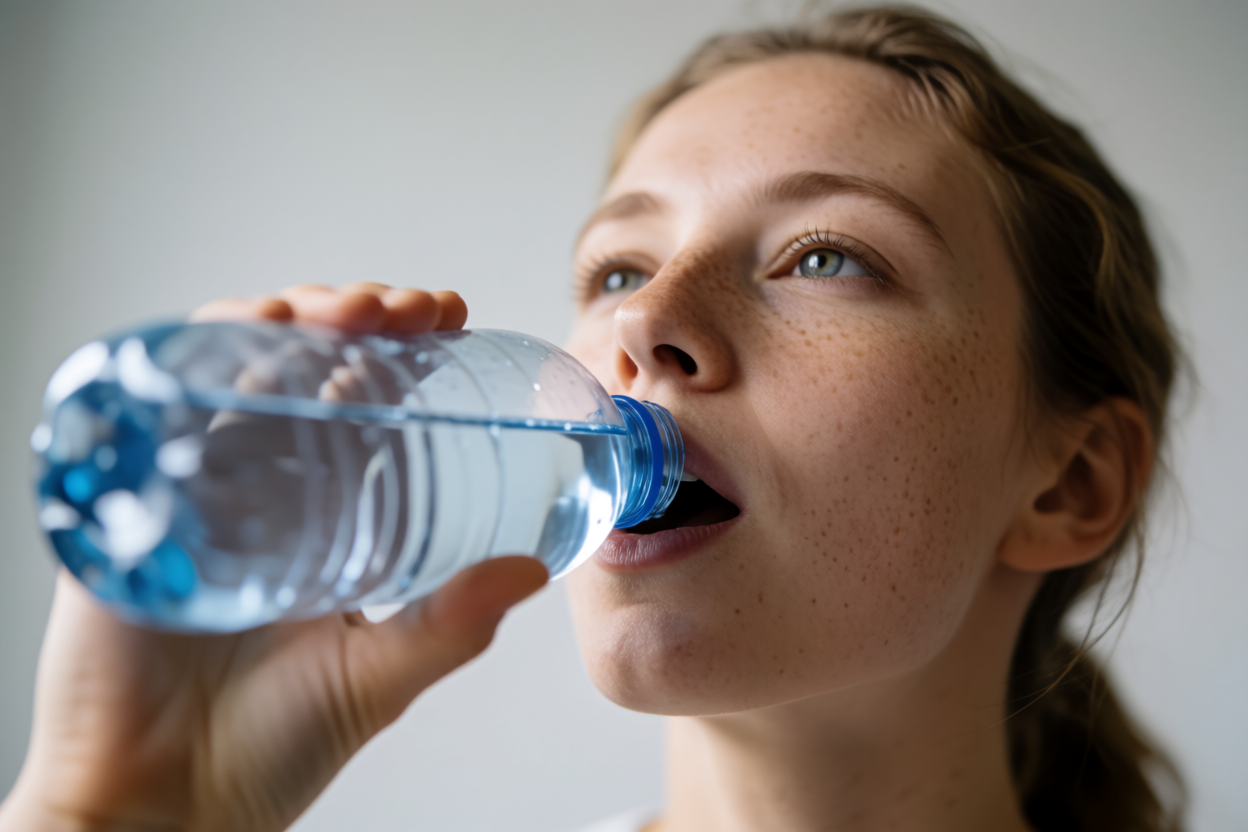
- Keep usual hydration consistent; do not deliberately dehydrate or overdrink.
- Record unusual circumstances such as illness, travel or a particularly demanding training day.
Tell the provider about any relevant medical condition or implanted device before testing, and follow device-specific suitability guidance. Do not alter prescribed medication or clinical fluid instructions to improve a scan.
Keep lean mass and muscle mass distinct
Lean mass includes more than skeletal muscle, and terminology varies between methods. Changes in water can influence the compartments a report estimates. The published guide to lean mass versus muscle mass explains why those labels should not be used interchangeably.
A report that shows a lower lean-mass estimate does not, by itself, establish that you lost the same amount of muscle. Consider testing conditions and the pattern across comparable measurements.
Pair the scan with what you can do
Training records help answer a different question: are you completing more work with comparable exercises, resistance and control? Daily activities and your experience of training add context. They do not eliminate measurement uncertainty, but they prevent a single body-composition number from dominating the discussion.
For a useful framework, read how to assess strength-training progress. When measures disagree, investigate rather than deciding that one must be wrong.
Know when to involve your clinician
Unexplained rapid weight changes, persistent swelling, new shortness of breath or other concerning symptoms need clinical assessment. A gym scan cannot diagnose fluid retention, dehydration or a medical cause of weight change. Follow any condition-specific instructions from your care team.
Should I repeat a surprising scan immediately?
First review preparation and the reason for testing. Another reading under the same unusual conditions may repeat the same uncertainty. Agree an appropriate comparison with the provider.
How does proof3 use this information?
Body-composition estimates are one part of the wider proof3 Assessment. The useful outcome is a clearer training decision, not a judgment about one day's number.