Your first fitness assessment should leave you better informed about how to begin. You do not need to prepare by getting fitter or learning gym terminology. You do need clear instructions, a chance to explain your goals and an understanding of what the results can tell you.
This guide focuses on preparation and the questions to ask at proof3 in Scottsdale. The purpose is to make the appointment useful, not to help you produce the highest score on the day.
Before booking: explain anything that may affect participation
Tell the team about relevant exercise restrictions, recent illness or injury, pain and guidance from your healthcare professional. Ask whether anything needs to be clarified before the visit. A fitness assessment is not a substitute for medical clearance where your circumstances require it.
If testing equipment raises a suitability question, such as an implanted electronic medical device, raise it in advance and follow device-specific and clinical guidance. Do not assume every assessment element is appropriate for everyone.
Ask for the preparation instructions
Confirm clothing, footwear, appointment length, arrival arrangements and whether any preparation applies to the measurements. Follow the provider's current instructions for the equipment being used.
InBody's testing guidance emphasizes consistent preparation. Food, fluids and recent exercise can affect the context of a reading. Do not deliberately dehydrate, overdrink or change prescribed medication to produce a preferred result.
If you are unsure how instructions fit a medical condition, medication or eating needs, ask before the appointment. A useful baseline should reflect a safe, repeatable process.
Bring a goal you can describe in everyday terms
Think about what you want training to support. That might be carrying bags comfortably, feeling stronger on the tennis court, learning to lift or understanding body-composition changes during weight loss.
Bring relevant previous records if you have them, along with the date and method used. Results from different devices or tests may not be directly comparable. Also describe your normal activity and the session times you could realistically attend.
Understand the assessment categories
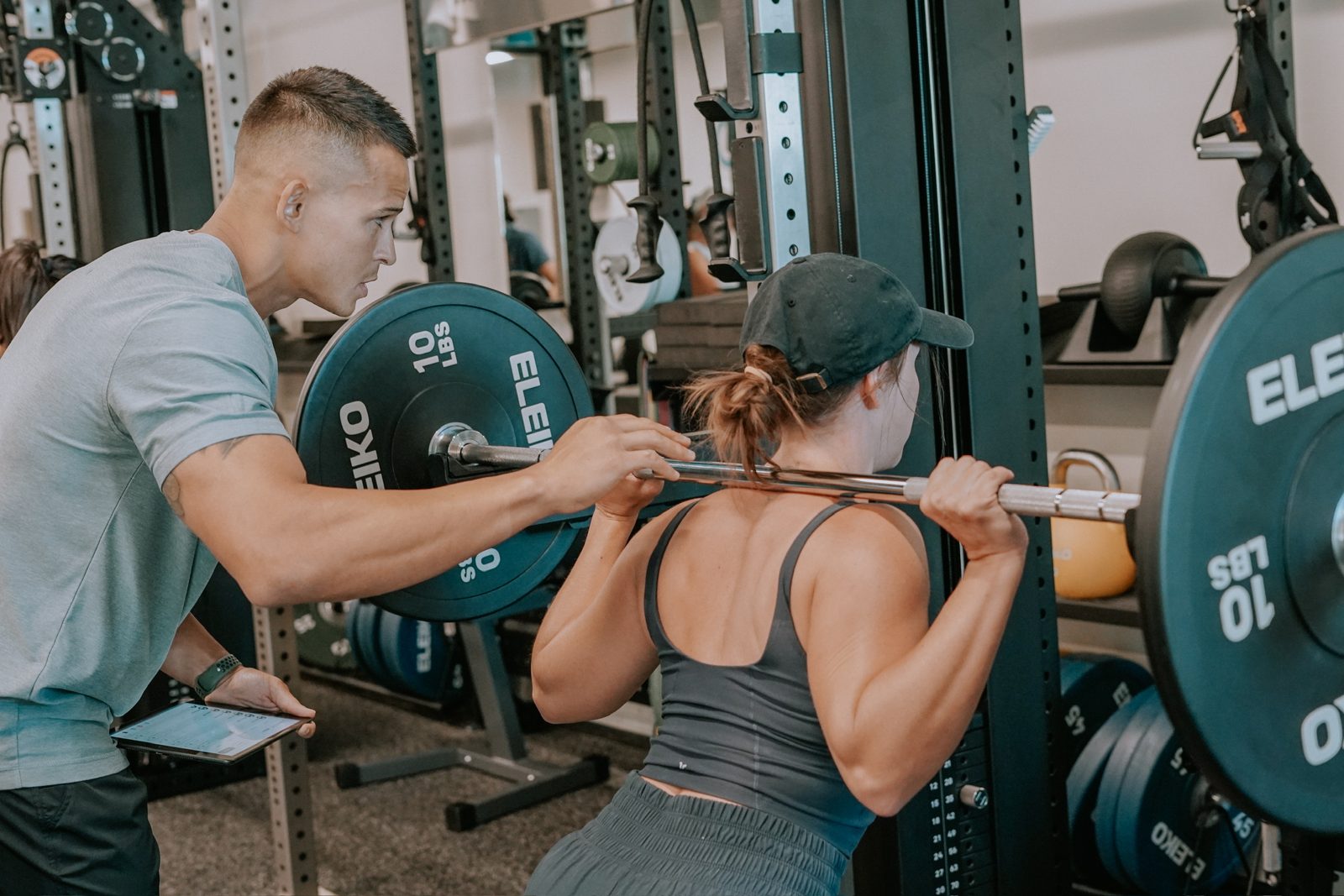
The proof3 Assessment combines body-composition information, movement observation and strength/power testing. Each contributes a different perspective. A coach should explain which findings relate to your goal and how they affect a training decision.
Body-composition estimates are not a medical diagnosis or a replacement for clinical bone-density testing. Movement observations do not guarantee that an injury will be prevented. A composite score can summarize information but should not replace an explanation of its underlying measures.
The detailed guide to what a fitness assessment measures explains the categories. The article on lean mass and muscle mass helps with terminology that can otherwise be confusing.
Ask questions during the appointment
You should understand the instruction before attempting a test. Ask for a demonstration or another explanation when needed. Report pain, dizziness or other symptoms promptly, and stop rather than trying to complete an uncomfortable task to improve a score.
For any result, ask: what does this measure, how uncertain is it, and what would change the interpretation? Those questions are especially useful when a number differs from a previous report or does not match what you notice in daily life.
Clarify privacy and access to your results
Ask how you will receive the report, who can view it and how it will be used for coaching. If someone else is paying for the visit, clarify what information they receive before participating.
Do not assume employer funding means the employer needs individual scan findings. Ask the provider to explain consent and information-sharing arrangements plainly.
Leave with an understandable next step
Before leaving, ask your coach to summarize the main priorities, suitable starting exercises and proposed review process. Confirm what the next appointment includes, what it costs and how to ask follow-up questions.
Distinguish ordinary training reviews from a full reassessment. The timing should relate to the measure and your plan, not simply a desire to collect more numbers. Our guide to reviewing strength-training progress describes the value of comparable records.
Can I fail the assessment?
It is intended to establish a starting point, not an entry standard you must pass. Discuss any task that needs to be changed or deferred.
How do I arrange a visit?
Review the current proof3 Assessment details and confirm preparation, suitability and appointment availability with the team.