Yes, we think a baseline scan is worth getting before you start a GLP-1. It won't change whether the drug is right for you. That's a conversation for you and your doctor. What it does is give you a starting point for your muscle and bone, so that later you can see what actually changed and respond to it.
In our experience, about half of the people on GLP-1s who come to us never had a "before" scan. A year ago we would have said 75%. Awareness is rising, and we're glad to see it.
Why would muscle be the thing to check?
It's the question members ask us most. The best data we found came from SURMOUNT-1, a large tirzepatide trial in adults without diabetes. 160 people had DXA body-composition scans at the start and again after 72 weeks. [source] Both the drug group and the placebo group got diet counseling aimed at a 500-calorie daily deficit and were told to move more. Neither had a strength-training program. [source]
The tirzepatide group lost 21.3% of body weight, versus 5.3% on placebo. Fat mass fell 33.9% (versus 8.2%), and lean mass fell 10.9% (versus 2.6%). [source]
Does the drug itself take more muscle?
Not by proportion. On tirzepatide, 74% of the weight lost was fat and 26% was lean mass. On placebo it was 75% and 25%. [source] The drug didn't change how the weight came off. It changed how much came off. More total weight lost means more total pounds of lean mass lost, even when the percentage is the same.
That fits what we see. Eating less usually means eating less protein, and when you eat fewer calories without strength training, you should expect to lose some muscle, drug or no drug.
Read the numbers with care. "Lean mass" on a DXA scan isn't the same as muscle. It also counts water, organs and other non-fat tissue. The study measured neither strength nor physical function, and nobody in it followed a structured strength program. [source] Body composition also wasn't one of the trial's registered outcomes, so treat these numbers as an exploratory look. [source] Eli Lilly, which makes tirzepatide, funded the study. [source]
Why does a baseline matter more after 40?
We work mostly with people over 40, many over 60. Most didn't start with high muscle mass, so they already face more risk of bone density problems than a 30-year-old who has already built muscle. In our experience, losing muscle and losing bone tend to travel together.
A scan before the first dose shows where you stand on both. Repeat it later and you can see whether your protein and training are working, instead of guessing from the scale. The scale can't tell fat from muscle.
What if I've already started?
Get one now. It's not as clean as a true "before," but it still gives you a number to work from. Then repeat it on a schedule you and your coach agree on.
What do you do with the scan?
- Eat enough high-quality protein to support your muscle.
- Don't live in a constant deficit. Eating at or below your basal metabolic rate is something your body can't sustain, and we'd expect you to burn through muscle.
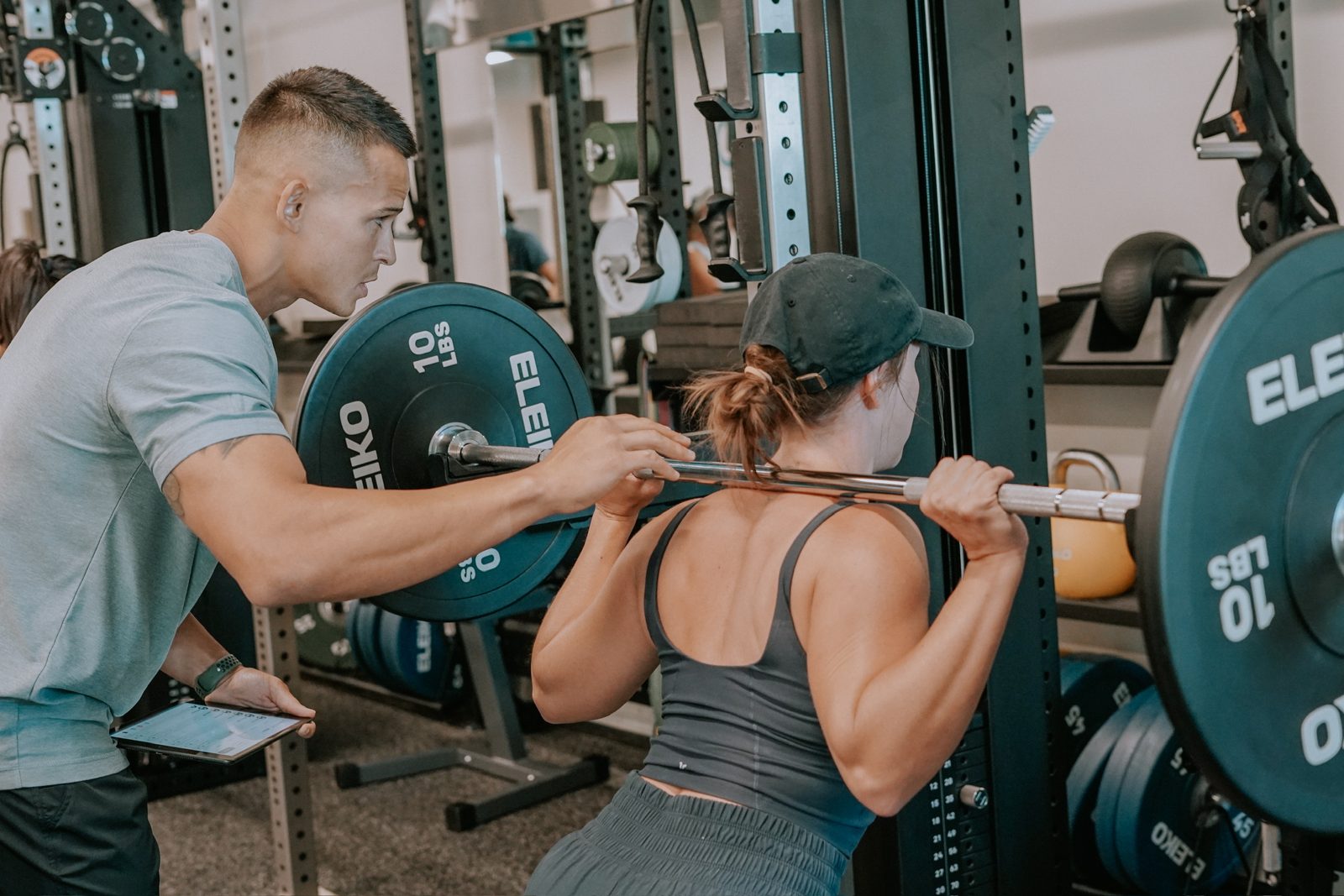
- Strength train consistently. Most of our people train 3 days a week, since building muscle directly supports building bone density.
- Support it all with water, sleep, movement, sunlight and lower stress.
We still think reducing body fat and visceral fat is worth the work when you're carrying a lot of it. Many members on GLP-1s see real gains there, and some say the drug quiets constant thoughts about food. The aim is to keep that benefit while protecting muscle and bone.
One open question: trials such as LEAN-PREP are testing resistance exercise and protein during GLP-1 treatment, with primary completion listed for 2029. [source] Until then, we don't know how much training changes that 26% figure.
Takeaways
- A baseline scan shows your starting muscle and bone, so later changes mean something.
- In SURMOUNT-1, 26% of weight lost on tirzepatide was lean mass, close to the 25% on placebo. [source]
- Protein, enough food and strength training are the levers you control. Medication decisions belong with your doctor.
We coach training, lifestyle and nutrition, not medication. If you're on or considering a GLP-1, make changes with your prescribing doctor. Read the full article, "Do GLP-1 drugs cost you muscle? What one big trial actually measured," for the complete look at the study.
Want the full research breakdown? Read Do GLP-1 drugs cost you muscle? What one big trial actually measured.
This article is for general education about fitness and health. It is not medical advice. Talk to your doctor before changing medication, diet or training because of anything here.
Live Stronger For Longer
Replace guesswork with data-driven strength and endurance training built around how your body actually moves.
No commitment. A coach will call you back — usually the same day.