Yes, you will likely lose some lean mass on tirzepatide. You would also lose some while dieting without it. In SURMOUNT-1, the share of weight lost that was lean mass was about the same on the drug as on placebo. The drug caused more total loss, so more pounds of lean mass went with it. Here is what I found, and what we'd do about it.
What did SURMOUNT-1 measure?
It was a large tirzepatide trial in adults without diabetes. A subset of 160 people had DXA body-composition scans at the start and again at 72 weeks [source]. Some took tirzepatide and some took a placebo. Both groups got diet counseling aimed at a 500-calorie daily deficit and were told to move more, but nobody followed a strength-training program [source].
The tirzepatide group lost 21.3% of body weight, versus 5.3% on placebo. Fat mass fell 33.9% versus 8.2%. Lean mass fell 10.9% versus 2.6% [source].
So is the drug eating your muscle?
Look at the mix of what came off. On tirzepatide, 74% of the weight lost was fat and 26% was lean mass. On placebo it was 75% and 25% [source]. The drug didn't change how weight came off. It changed how much came off.
That is the part worth sitting with. Eating less, and so eating less protein, tends to cost lean mass whether or not a drug is involved, especially with no strength training. Because the percentage stays similar while the weight loss is bigger, the total pounds of lean mass lost are higher on the drug.
A better question. The better question isn't "will I lose muscle?" It's "how much, compared with other ways of losing weight, and how much can protein and lifting change that?"
What the trial can't tell us
- "Lean mass" on DXA isn't the same as muscle. It also counts water, organs and other non-fat tissue [source].
- The study measured neither strength nor physical function [source].
- Nobody followed a structured strength program, so we don't know how much lifting would have changed the picture [source].
- Body composition wasn't one of the trial's registered outcomes, so treat this as an exploratory look, not its main result [source].
How much should we trust it?
Eli Lilly, which makes tirzepatide, funded the study and was involved in its design, analysis and writing [source]. That doesn't make it a bad study, but it's worth keeping in mind as a possible source of bias.
In all, 255 people enrolled and 160 had both scans and were analyzed [source]. Participants averaged 46 years old, 73% were women, and they were overweight without diabetes, averaging over 200 lbs [source]. I'd love to know why almost 100 people didn't have both scans. It may be nothing, but I'd like to know.
What to do if you're over 40 and weighing tirzepatide
In our experience, the people who come to us on a GLP-1 are eating fewer calories and so less protein, and most are losing muscle. We also see muscle and bone loss travel together. That matters more after 40, when many people didn't start with much muscle to spare. Here is what we coach:
- Get a baseline body scan before you start, if you can. About half the GLP-1 users we see never had one.
- Eat enough high-quality protein to support your muscle.
- Don't sit in a constant deficit. Eating at or below your basal metabolic rate is something your body can't sustain, and we'd expect it to burn through muscle.
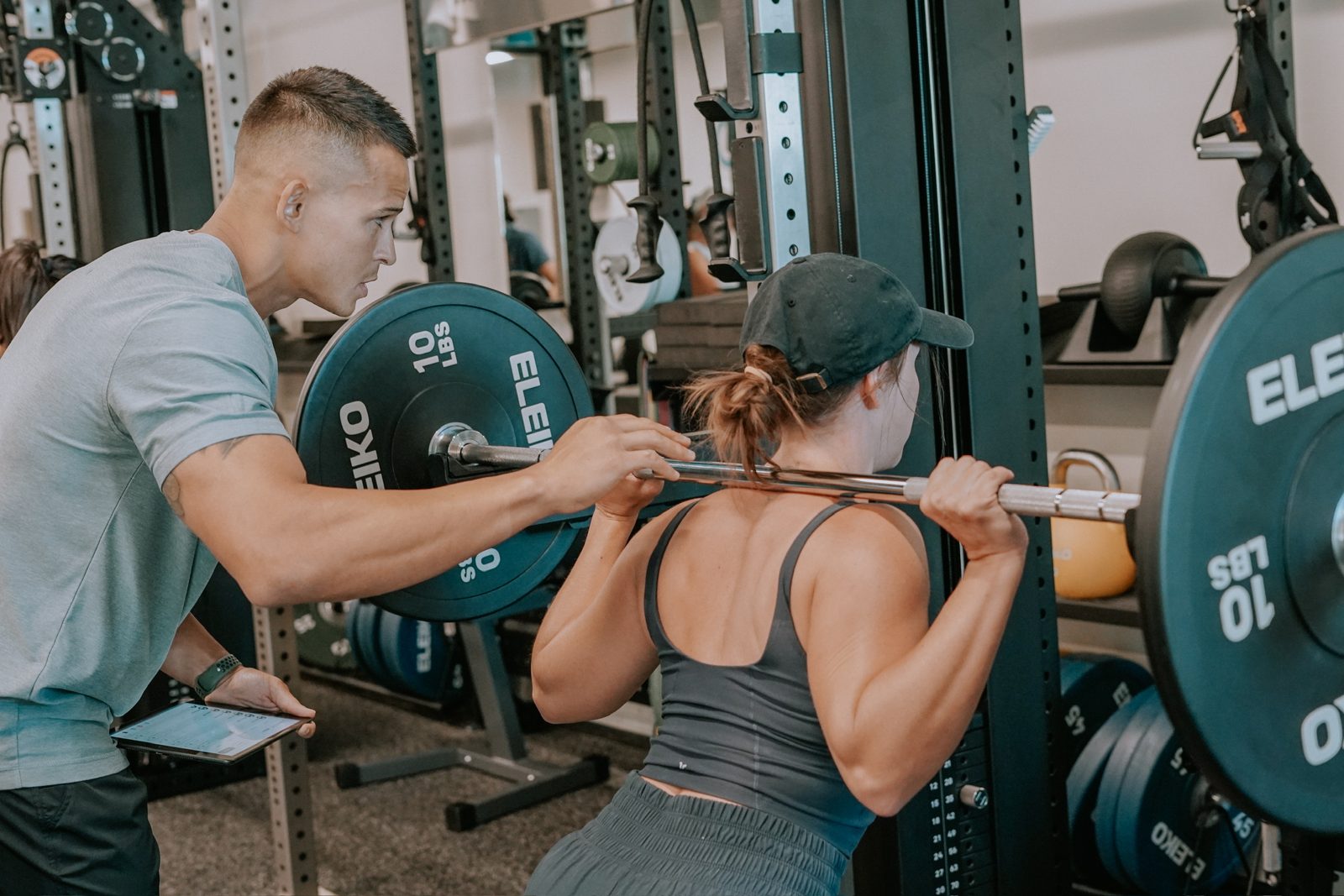
- Strength train consistently. Most of our members train 3 days a week, which supports both muscle and bone density.
- Support it all with water, sleep, movement and lower stress.
We also don't want to overstate the downside. Carrying a lot of body fat and visceral fat is typically more dangerous than losing a pound of muscle. For many people, losing fat is worth the work. We've also seen GLP-1s quiet food noise for members. About 15% of the people we've worked with stopped because of side effects, though many later found a version that suited them.
Whether to take a GLP-1, and which one, is a decision for you and your prescribing doctor. We coach training, food and lifestyle, not medication.
Key takeaways
- Tirzepatide's weight loss was about 74% fat and 26% lean mass, close to placebo's 75/25 [source].
- More total weight lost means more total lean mass lost, so protecting muscle matters more.
- The trial had no strength training, so lifting's effect is still unknown.
Read the full article, with the study details and our thinking, at proof3.com.
Want the full research breakdown? Read Do GLP-1 drugs cost you muscle? What one big trial actually measured.
This article is for general education about fitness and health. It is not medical advice. Talk to your doctor before changing medication, diet or training because of anything here.
Live Stronger For Longer
Replace guesswork with data-driven strength and endurance training built around how your body actually moves.
No commitment. A coach will call you back — usually the same day.