During menopause, body weight may not tell the whole story of what is changing. Sleep, symptoms, activity and body composition can all influence the experience of training. If weight loss is a goal, the plan should also consider strength, adequate nutrition and the activities you want to keep doing.
Resistance training can be a useful part of that plan. It does not guarantee fat loss, reset hormones or make every change in midlife attributable to menopause.
Understand the difference between weight and body composition
A longitudinal SWAN analysis found changes in fat and lean-mass trajectories around the menopausal transition that were not simply mirrored by a sudden acceleration in weight gain. The study describes group patterns; it does not predict an individual's result or prove why a particular person's body changed.
Aging, medical conditions, medication, eating patterns and activity can also matter. Discuss unexplained changes or troublesome symptoms with your healthcare professional rather than assuming a workout program can address every cause.
Use strength training for a clear purpose
Resistance work gives muscles a repeated physical demand and provides opportunities to develop strength. During weight loss, maintaining physical capability is a useful goal alongside any change on the scale.
A systematic review of resistance exercise during dietary weight loss found benefits for preserving fat-free mass and improving strength compared with diet alone. Those findings were not specific to menopause or proof3, and fat-free mass is not identical to muscle mass.
Training cannot guarantee that no muscle will be lost. Avoid framing a small gain in muscle as an enormous metabolic boost or suggesting that strength work alone determines fat loss.
Begin at an appropriate level
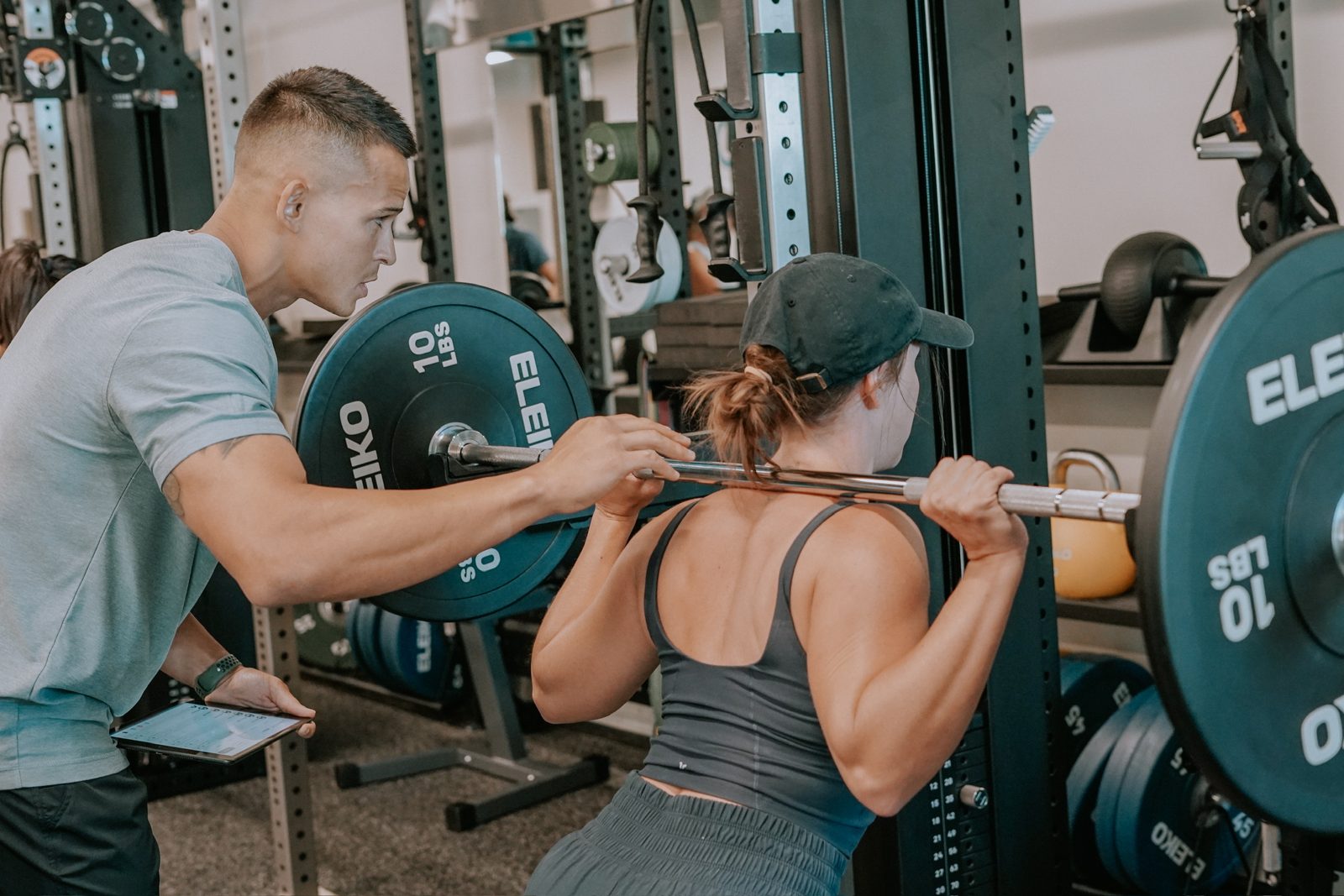
Ask a coach to explain exercise selection, resistance and the intended effort. Machines, free weights, bands and appropriate body-weight exercises can all be options. Familiarity and control matter more than choosing the most demanding-looking movement.
Adult guidelines include muscle-strengthening activity on at least two days a week, but the route toward a routine should fit your experience and health circumstances. Discuss how to build gradually rather than adopting a demanding schedule immediately.
The existing guide to strength training during menopause explains the coaching context. This article focuses on how that work fits alongside a weight-management goal.
Keep aerobic activity and food intake in view
Choose aerobic activities you can sustain and fit them around strength work. Eating habits and overall activity influence weight change; no specific class guarantees a reduction in body fat. A clinician or dietitian can help with an individualized weight-management or nutrition plan.
If appetite is low or you are using prescribed weight-loss medication, explain those circumstances to your care team. More exercise is not a solution to persistent difficulty eating enough. Keep medication decisions with the prescribing professional.
Treat bone health as its own question
In the LIFTMOR randomized trial, a supervised resistance-and-impact program improved bone-density and function measures in screened postmenopausal women with low bone mass. Those results apply to that intervention and population, not automatically to another program or unsupervised heavy lifting.
If you have osteoporosis, a prior fragility fracture or concerns about bone health, seek appropriate clinical exercise guidance. A gym body-composition scan cannot diagnose osteoporosis or replace clinical bone-density testing.
Review recovery and meaningful progress
Tell your coach when sleep disruption or changing energy affects sessions. Adjust the workload as needed and review comparable exercise records. Body-composition estimates can add information when preparation and methods remain consistent, but one reading cannot explain every change.
The article on looking beyond the scale in midlife explains why performance, movement and body composition should be interpreted together.
Will lifting automatically make me lose weight?
No. Strength training can serve muscle and capability goals even when scale weight does not change. Weight management involves more than the workout.
How can proof3 help?
The proof3 Assessment provides a fitness starting point for coaching. Bring relevant healthcare guidance and ask which measures will inform your training plan.