Small-group strength training and personal training can both provide useful coaching. Neither format, by itself, proves how effective a program will be for you. The important questions concern the instruction, progression and support you actually receive.
Begin with the decisions you want help making. Do you need someone observing every set, or would planned group sessions with individual adjustments give you enough guidance? The answer can change as you gain experience.
Understand what each format promises
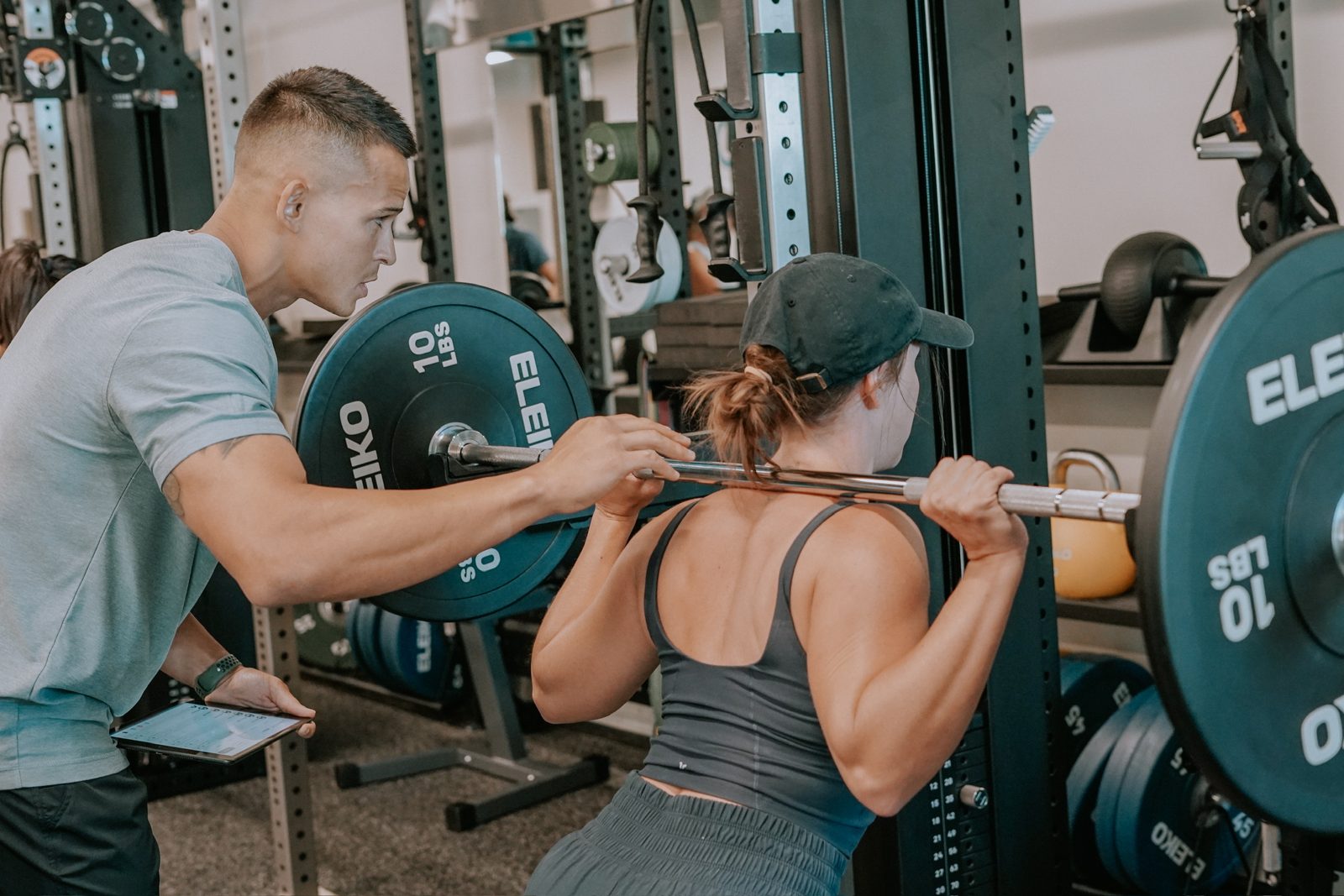
One-to-one personal training dedicates the session to you. It may provide more uninterrupted time for questions, demonstrations and practice. A small group shares coaching attention while participants may use different exercises, resistance or pacing.
Group fitness is another category. Some classes follow a largely shared routine; others allow substantial adjustment. Ask what the coach can change rather than relying on the words “personalized” or “small.”
Our explanation of small-group training at proof3 describes how individual guidance fits into the shared setting.
Compare the introduction, not just the usual session
Ask how a beginner learns the equipment and how starting resistance is chosen. Find out whether there is time to practice before joining the normal format. A new exerciser should not have to guess what to do because the rest of the room already knows.
Observe whether questions are answered clearly and whether the coach checks the result of an instruction. A small number of people is helpful only when the available attention matches their needs.
Test how individual adjustments work
Ask for examples: what happens when a participant needs a different exercise, more rest or another explanation? How are restrictions from a healthcare professional incorporated? How does the next coach learn what was changed?
The ACSM's updated resistance-training guidance supports tailoring the work to the individual. It does not establish that one-to-one and group services produce identical results or that proof3's format has been tested against personal training.
If you need clinical rehabilitation, the appropriate professional and service matter more than the group size. Fitness coaching should operate within relevant clinical guidance rather than replace it.
Decide how much privacy you want
Some people prefer discussing goals and concerns privately throughout a session. Others enjoy company and do not mind sharing the room. Ask which conversations happen separately and how personal assessment results are handled.
Personal training is not inherently isolating, and a group is not automatically welcoming. Experience the actual setting. Notice whether you feel comfortable learning, asking for an adjustment or returning after time away.
Consider accountability without assuming it works the same for everyone
A booked private appointment can provide structure. A familiar group can also make attendance more appealing. Neither guarantees consistency, especially if the session time or location is impractical.
The article on small-group accountability explains how shared effort can support a routine. Decide whether that experience suits you rather than treating social interaction as an obligation.
Compare the complete cost
Ask for current prices, expected session frequency, introductory costs, assessments, cancellation rules and package expiry. Do not compare an hourly private-session fee with a monthly membership without accounting for what each includes.
A lower price is useful only if the service supplies enough support. Conversely, more expensive one-to-one time may be unnecessary if you can train confidently with shared attention. Avoid assuming local price ranges without a current quote.
Judge the review process
Ask what is recorded and when the coach reviews it. The explanation of strength progress shows why comparable work matters in either format. Assessment results should lead to an understandable next step.
Which is better for beginners?
Either can fit when the introduction, instruction and attention are appropriate. Try the actual service and discuss what you need help with.
Can I change formats later?
Ask the provider about availability and terms. Needs can change with experience, goals or circumstances.
Discuss the current options with proof3 and compare the support, setting and commitment before choosing.
Live Stronger For Longer
Replace guesswork with data-driven strength and endurance training built around how your body actually moves.
No commitment. A coach will call you back — usually the same day.