Maintaining muscle while losing weight on a GLP-1 requires a plan for both diet and exercise. Yes, protein matters. But eating protein alone does not replace strength training. A joint clinical advisory recommends addressing exercise and adequate nutrition together during treatment. Neither can guarantee that you will retain every pound of muscle. [1]
At proof3, weight loss is just one metric—not the only one. We also want to know how you move, how you feel when you work out, and whether you can keep doing the things that matter to you.
Why does strength training belong in a weight-loss plan?
Strength training challenges your muscles against resistance, which can come from weights, machines, or suitable body-weight exercises.
A review of dietary weight-loss trials found that adding resistance exercise helped limit the loss of fat-free mass compared with dieting alone. Strength outcomes also improved, though the evidence varied in certainty. These trials examined dietary weight loss; they do not show that a specific program prevents muscle loss during GLP-1 treatment. [2]
There’s a practical reason to begin training while you’re losing weight rather than waiting until you reach your target.
What should your training look like?
Choose a routine you can stick with. Most of our members do a proof3 workout three days a week. But everyone is different, which is why we personalize the workout experience.
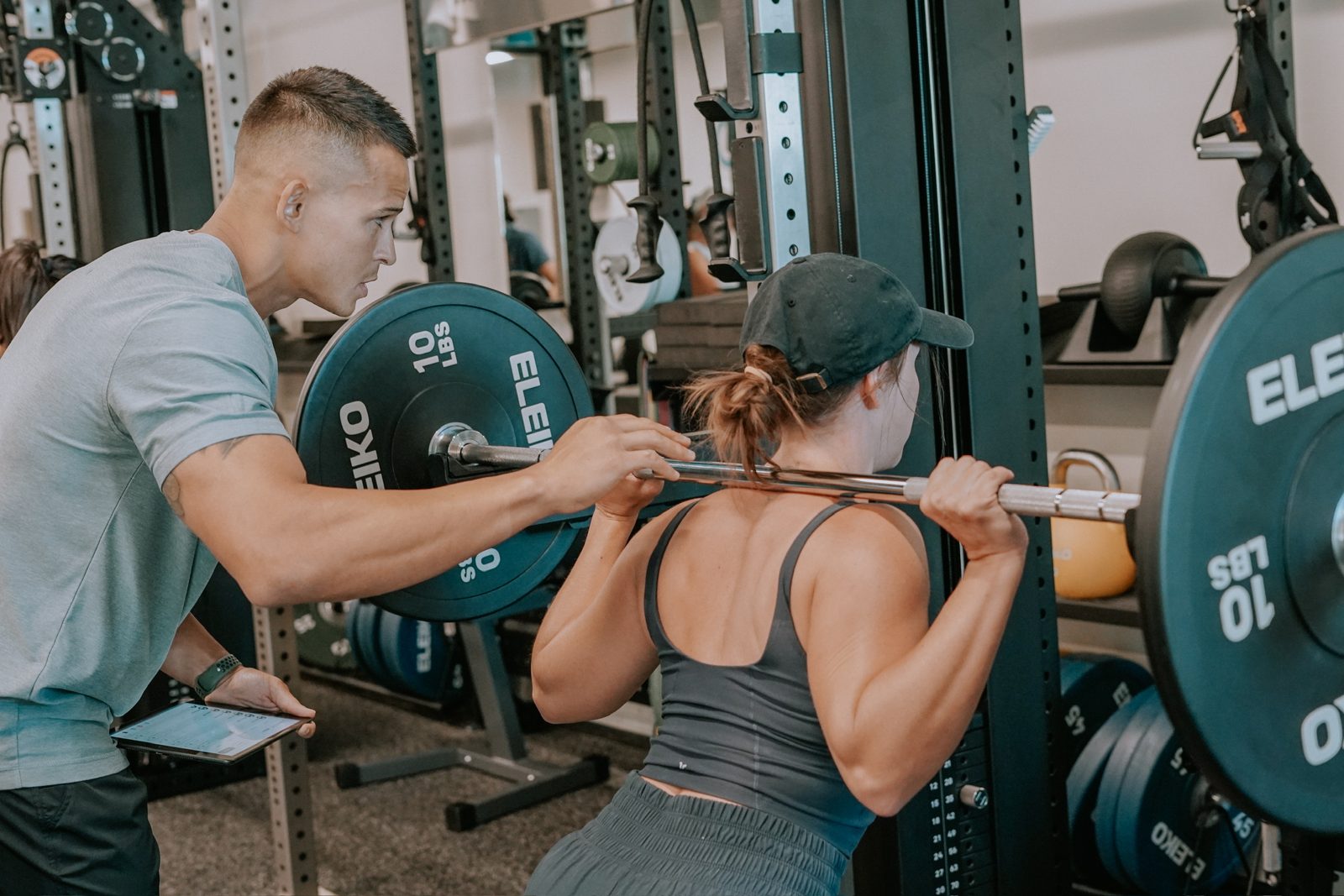
A coach can help you choose exercises and resistance that fit your experience, goals and any exercise guidance from your clinician.
Take a row, for example. You pull resistance toward you and record the weight, repetitions and how well you controlled the movement. Those notes give you and your coach a basis for deciding when to adjust.
Consistency matters more than making every session exhausting. You need enough structure to return to the work and see how it is progressing.
Is eating more protein enough?
No. The clinical advisory recommends adequate protein and nutrition alongside structured strength training. They are parts of the same plan. [1]
If your appetite has changed, talk to a clinician or dietitian. Describe a typical day of eating and movement to them. That information will give them something concrete to work with as they help you choose an appropriate plan.
If you are struggling to eat enough, adding more workouts will not solve that problem. Food intake, training, and recovery need to be considered together.
What about bone health?
Bone health belongs in the conversation, too. Resistance and weight-bearing exercise can support bone health, and appropriate exercises depend on the person. If you have osteoporosis, low bone density or other limitations, discuss exercise with your clinician. [3]
A gym body-composition reading cannot diagnose osteoporosis. That requires a DXA scan. Tracking muscle and assessing clinical bone density require different measurements.
How do you know the plan is working?
You can measure progress using your metrics and how you feel. Compare your exercise records with how daily activities feel. Comparable assessments can add context. If performance or recovery continues to decline, review the plan with your coach and care team rather than assuming you need to train harder.
At proof3 in Scottsdale, we use assessments and coaching to build a training plan around your starting point and goals. Learn about the proof3 Assessment.
Your prescribing clinician handles medication decisions. Our role is to help you train consistently, review progress and keep your everyday capabilities in view.
Sources
[1] Nutritional priorities to support GLP-1 therapy for obesity. Joint clinical advisory, 2025.
[2] Binmahfoz et al. Resistance exercise during dietary weight loss: systematic review and meta-analysis, 2025.
[3] National Institute of Arthritis and Musculoskeletal and Skin Diseases. Exercise for Your Bone Health.
Source article: Jim's GLP-1 research article.
This article is for general education about fitness and health. It is not medical advice. Talk to your doctor before changing medication, diet or training because of anything here.
Live Stronger For Longer
Replace guesswork with data-driven strength and endurance training built around how your body actually moves.
No commitment. A coach will call you back — usually the same day.